

Christmas Wall Art: Festive, Not Tinsel
Festive does not have to mean loud. One well-scaled winter picture in the room where people gather usually beats a house full of novelty prints.
Key Takeaways
- Build from one of three quiet families — winter landscapes, vintage posters from Christmases past, or a single typographic line — rather than novelty prints that have to shout over the tree, garlands, and lights.
- Give one room the season: pick where Christmas actually happens, hang one anchor piece and perhaps one smaller companion there, and keep the palette on a leash — deep green, cream, warm white, and one red are plenty.
- Shop your own house first: a deep green landscape, anything with snow, a winter-fruit still life, or a portrait in a gilt frame already joins the season in December, while bright summer abstracts and noon beach scenes should sit it out.
- The mantel piece should share its stage with stockings, garland, and cards, so choose the calm end of any family there; the entryway forgives a bolder single piece, but cannot survive accumulation.
- Plan the swap as a swap: the Christmas piece takes the same size and hook as the piece it replaces, and what comes down is wrapped face-protected and stored upright somewhere dry and temperate.
Christmas decorating has a volume problem. The season arrives with garlands, lights, a tree, and a small army of figurines, and the walls are usually where restraint goes to die: down comes the art that works all year, up goes a novelty print that has to shout to be heard over everything else. It does not have to work that way. Christmas wall art earns its place the same way any good art does — by suiting the room — and the festive feeling comes from the company it keeps, not from how loudly it announces the holiday.
The useful way to think about it: you are not decorating for a theme park, you are giving one or two rooms a winter register for a few weeks. Three families of images do that job reliably, and most good seasonal walls are built from just one of them.
Winter landscapes: the season without the costume
The most durable Christmas art is simply a winter scene. Snow-covered fields, bare trees against a low sun, a village under a grey sky: these read as festive in December because everything around them is festive, and they read as calm, serious pictures in January if they stay up a week too long. A snow scene never embarrasses you the way a grinning character print does by New Year’s Day.
Look in the landscapes for images with a restrained palette — whites, blue-greys, deep greens, one warm note of lamplight or a red barn if you want it. Scale matters more than subject: one generous winter landscape over the sofa or the mantel carries the whole room’s season, where four small prints would fuss. The living room is where the season gathers, so it gets the anchor piece; the rest of the house can stay as it is.
Vintage posters: nostalgia with good manners
The second family is the printed ephemera of Christmases past: early twentieth-century holiday posters, railway advertisements for winter resorts, sheet-music covers and magazine illustrations from the decades when Santa wore a long coat and the typography did half the work. These pieces have a graphic confidence that modern novelty art rarely matches, and their aged palettes — cream, brick red, pine green, mustard — sit comfortably in real rooms.
The vintage style is the place to browse for them. Hung in a simple frame at a decent size, a single period poster reads as a collected object rather than a decoration, and it gives guests something to actually look at. One caution: the charm depends on scarcity. Three vintage pieces in a room is a collection; nine is a gift shop.
Christmas wall art in one line: typographic pieces
The third family is words: a carol line, a winter poem fragment, a single seasonal word set in a handsome typeface on a quiet ground. Typography works at Christmas because the season is full of language people already love, and a short line — set large, with generous margins — can hold a hallway or the wall above a sideboard without competing with the tree.
The discipline here is choosing one line and letting it be the only text on the wall. A room can absorb a single sentence; it cannot absorb a wall of competing slogans. Choose words you would still enjoy reading in the second week of December, not just the first.
Choosing the line is a taste test with a simple filter: words written for singing or reading aloud tend to hang well, because they were built to be lived with rather than glanced at. A verse of a carol everyone knows, two lines of a winter poem, the place and date of a family Christmas tradition set like a title page — all of these deepen with a month of readings. The novelty slogan does the opposite, which is why the typographic family, more than the other two, rewards choosing slowly in November rather than grabbing in December.
The dining room, if it gets a seasonal piece at all, should borrow the typographic register or the quietest landscape of the set: it is a room people sit in for hours at candle height, facing the walls, and anything loud will be studied into weariness before the main course ends.
How much Christmas wall art is enough
The rooms that feel most festive are rarely the ones with the most Christmas in them. A working approach: pick the room where the season actually happens — usually the living room, sometimes the entryway or dining room — and let that room carry it. One anchor piece, perhaps one smaller companion, and the greenery and lights you already own will do the rest. Other rooms get, at most, a wreath.
Keep the palette on a leash. Deep green, cream, warm white, and one red are plenty; every additional color dilutes the ones before it. If your year-round art already runs warm, Christmas pieces in cool winter blues can look stark and elegant against it. If your room is cool and grey, lean on the vintage family’s warmth instead. Festive is a register, not a quantity.
Working with the art you already own
Not every wall needs a seasonal piece, and some of your year-round art is secretly Christmas art already. A deep green landscape, anything with snow, a still life with winter fruit, a portrait in a gilt frame: in December, with greenery on the mantel and lamplight arriving at four, these pieces join the season without being swapped at all. Before you shop, walk the house and promote what you own. The strongest seasonal rooms usually mix both kinds — two pieces that arrived for the season, and two that were always there, suddenly looking like they planned it. And if the piece you are choosing is headed for someone else’s wall, treat it as wall art as a gift and choose a safe subject at a size that suits a home you have not measured.
The pieces that should sit December out are the ones fighting the register: bright summer abstracts, beach scenes in full noon sun, anything whose colors turn shrill next to pine green and candlelight. Resting them is not a demotion. It is what makes the room read as one thought, and it gives those pictures a small holiday of their own — they will look new again in January, which is the swap system’s quiet bonus: the house refreshes twice a year without a single purchase.
The mantel and the entryway
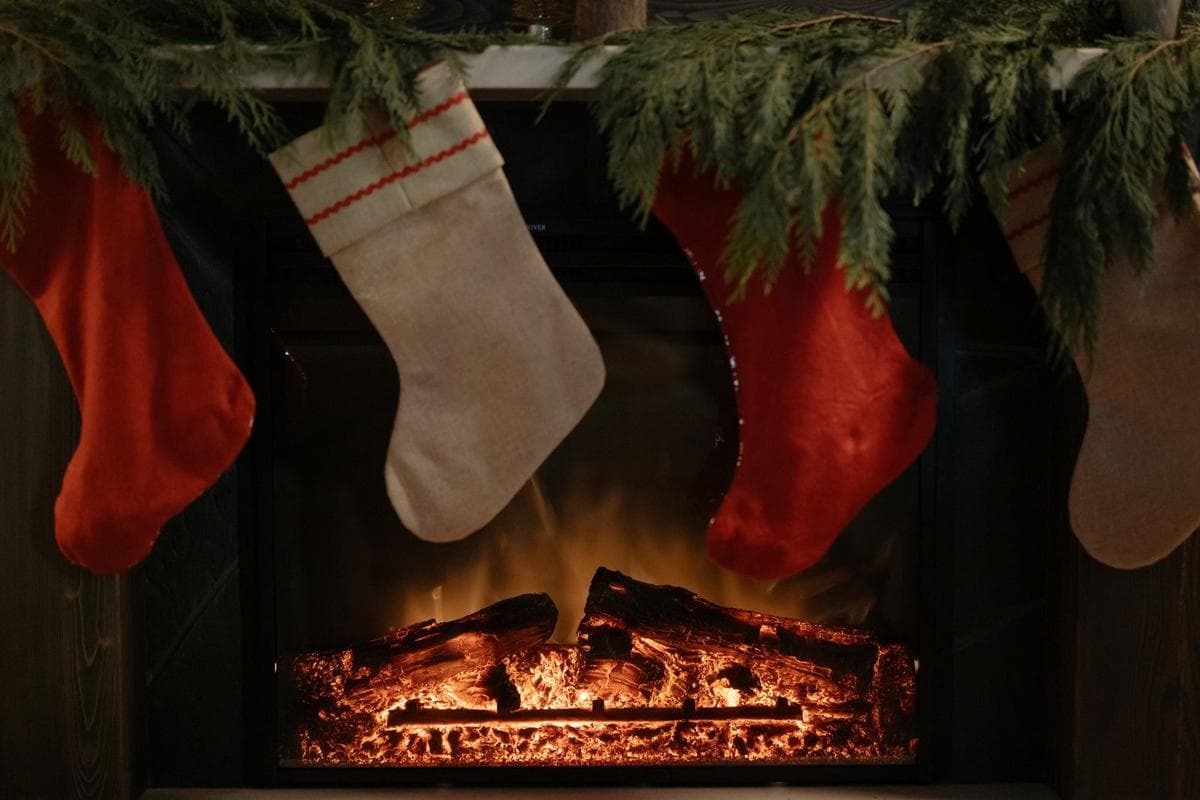
Two spots deserve specific mention. The mantel is the season’s stage, and the art above it should be chosen to share the stage rather than own it: the fireplace wall is already carrying stockings, garland, and cards, so the piece above it works best at the calm end of all three families — a winter landscape, one vintage poster, nothing that competes at the same volume. If your mantel art is year-round and neutral, leave it; a frame that stays while everything below it changes is an anchor, not an oversight.
The entryway is where the season is announced, and it forgives a bolder choice than the living room because people pass through it rather than sit in it. A single generous typographic piece or the richest vintage poster of your set can live there happily. What the entryway cannot survive is accumulation: coats, boots, parcels, and a wall of six small Christmas prints is a hallway arguing with itself. One piece, well chosen, is the whole job.
Swapping in, storing well
Seasonal swaps are easiest when they are planned as swaps — part of rotating wall art with the seasons rather than a fresh project each year: your Christmas wall art hangs where a year-round piece usually hangs, at the same size, on the same hook. Measure once, in the first year, and every December after that is a five-minute job instead of a fresh round of nail holes.
What comes down — often the fall wall art that carried the room through autumn — needs somewhere decent to spend the year. Wrap each piece face-protected — a sheet of foam or plain paper against the surface, cardboard corners if the frame is delicate — and store it upright, never flat-stacked, somewhere dry and temperate. The winter landscape’s off-season home matters as much as its December wall: art that is stored badly comes back a little worse each year, and the swap quietly stops being worth doing.
Choose the quiet families, give one room the season, and let scale and palette do the work tinsel usually gets asked to do. The result still reads unmistakably as Christmas — it just reads as Christmas in a house where someone has taste.
More in Seasonal





Continue exploring: Seasonal guides · All guides