

Hospitality Wall Art for Hotels and Rentals
Guests notice a room's walls in seconds, then live with steam, luggage, and cleaning. Local images on hard-wearing formats are what hold up.
Key Takeaways
- Lead with local subjects: show the mountains, coast, or street the property is actually in, carried from a signature lobby view through bedrooms and corridors at different scales.
- Specify durable, wipeable formats for hard-working rooms, avoid glass where a fall would matter, and think through edges and corners that housekeeping carts will meet.
- Use security fixings on every reachable piece, keeping work level through knocks and cleaning, and above beds use the lightest format that does the job on the most secure fixing.
- Standardize sizes and keep a written record of room, subject, size, supplier, and date, so a damaged piece is a reprint and straight swap rather than a redesign.
- Inspect on a schedule - twice a year in the guide's cycle - checking level, fixings, surfaces, and fading, and ask up front whether a supplier can reprint an exact piece to match later.
Guests judge a room in the first ten seconds, and the walls do much of the talking. Hospitality wall art has a harder job than home art: it must look considered to people who will never meet the person who chose it, survive steam, luggage, and enthusiastic cleaning, stay exactly where it was hung, and — in the properties that get it right — give guests something they want to photograph. The good news is that the rules are few and learnable, and they are mostly about format discipline and local pride.
Hospitality wall art starts with local subjects
The single highest-value choice in hospitality art is sense of place. A guest room in the mountains should show its mountains; a coastal rental should show its coast. Local landscapes do three jobs at once: they tell the guest they are somewhere specific rather than anywhere, they give the listing photographs a signature image competitors cannot copy, and they send guests home with the place still in their heads. Generic hotel art — the abstract smear, the stock beach three time zones away — does none of those jobs, and guests can tell the difference at a glance even when they cannot name it.
Carry the local thread through the whole property at different scales: the signature view large in the lobby or main room, its details and seasons in bedrooms and corridors. One place, explored properly, beats a world tour in every property smaller than a resort.
Hospitality wall art: durable formats for hard-working rooms
A guest room is cleaned like a commercial space and treated like a borrowed one. Specify surfaces that can be wiped down without ceremony and that shrug off the bathroom steam a guest room lives with. Metal prints earn their popularity in this sector honestly: hard, sealed, and cleanable, with no frame lip to hold dust and no glass to break. Canvas and framed work have their place in softer zones — a lodge lounge, a breakfast room — but the bathroom-adjacent wall in a high-turnover rental is a job for the toughest format you can specify, and the same logic extends to any piece hung where luggage turns around.
Whatever the format, avoid glass in rooms where a fall would matter, and treat every edge and corner as something a housekeeper’s cart will eventually meet. Art that survives hospitality is art whose failure modes were thought about in advance.
Secure hanging is not optional
At home, a picture hangs on a hook and trust. In a property full of strangers, it hangs on hardware. Use security fixings — the locking systems that need a simple tool and a knowing hand to release — on every piece a guest can reach. The reasons are only partly about theft. Secure mounts keep pieces level through knocks and cleaning, keep heavy pieces honest above beds and sofas, and make your refresh inspections quick: a glance down the corridor tells you everything is still square.
Above the bed deserves its own rule, since it is where guests sleep under your specification: the lightest format that does the visual job, on the most secure fixing in the room. Reassurance is part of the decor.
Lobbies, corridors, and the in-between walls
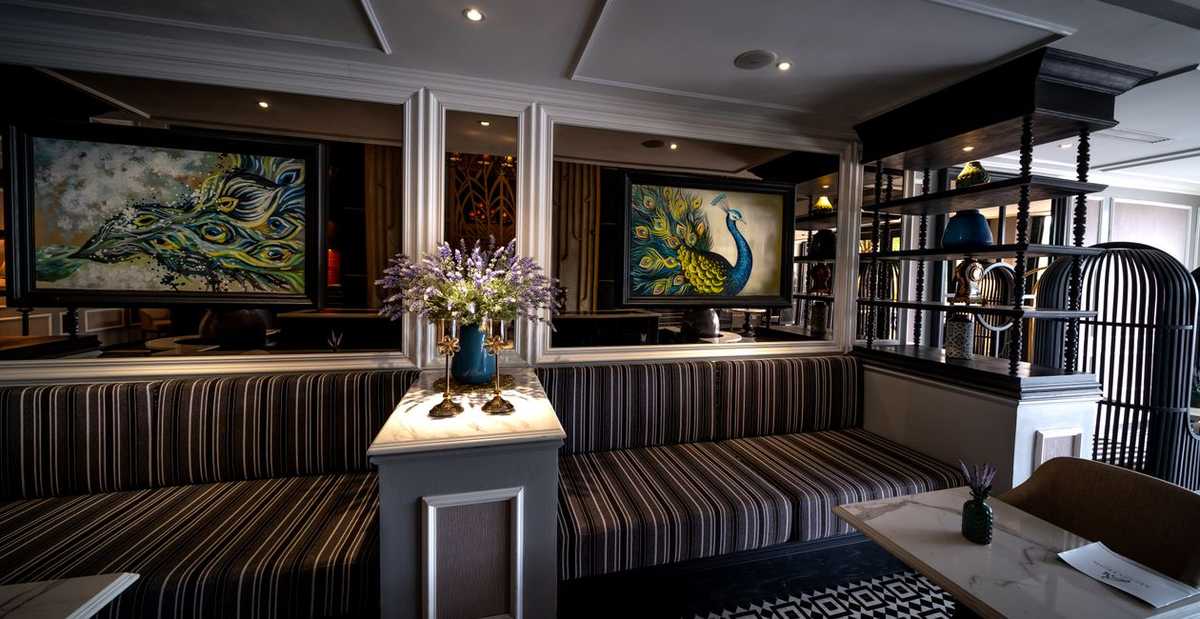
The guest-room wall is the photograph, but the public walls set the property’s tone before a guest finds the door. Lobbies can take the boldest piece in the building: scale up, choose the signature local view, and light it like you mean it — this is the image that ends up in reviews and social posts with your property’s name attached. Corridors work at the opposite register: a repeated rhythm of related pieces — one valley in four seasons, one coastline walked mile by mile — gives guests a sense of progress and the property a system that a replacement can slot into without redesign. Office corridors work to the same rhythm — one large anchor per sightline — as office wall art for calmer corridors sets out for workplaces.
Stairwells and elevator lobbies are the most neglected walls in hospitality and the cheapest to fix: guests stand still in them, facing the wall, with nothing else to look at. A single piece there gets more undivided attention than anything in the lounge.
Hotels and short-stay rentals play slightly different games
A hotel sells consistency: the room in the photograph is the room at check-in, at scale, under a brand’s eye. Its art program should therefore be the most standardized version of everything in this guide — fixed subjects per room type, fixed sizes, a replacement file the night manager could act on. A short-stay rental sells the opposite: the feeling that this place belongs to someone with taste. Its art can be more personal and more local still — the actual street, the actual beach at the end of the road — because the guest chose the property partly for that specificity.
What neither can afford is art that argues with the guest’s own plans for the room: confrontational subjects, heavy text, anything that reads as the owner’s opinions. Hospitality art sets a scene and then has the good manners to leave the guests alone in it.
The maintenance cycle nobody budgets for
Build the inspection into the calendar you already keep. Twice a year, walk every room with the record in hand: pieces level, fixings firm, surfaces wiped, any fading or damage noted against the replacement list. Steam and sunlight do their work slowly and then suddenly, and the properties whose art always looks new are not the ones that bought better pictures — they are the ones that look, on a schedule. Rotate the brightest-room pieces a half-step down the corridor if one wall is eating sun faster than its neighbors; the scheme survives, and no single piece takes the whole beating.
Scale in the guest room itself
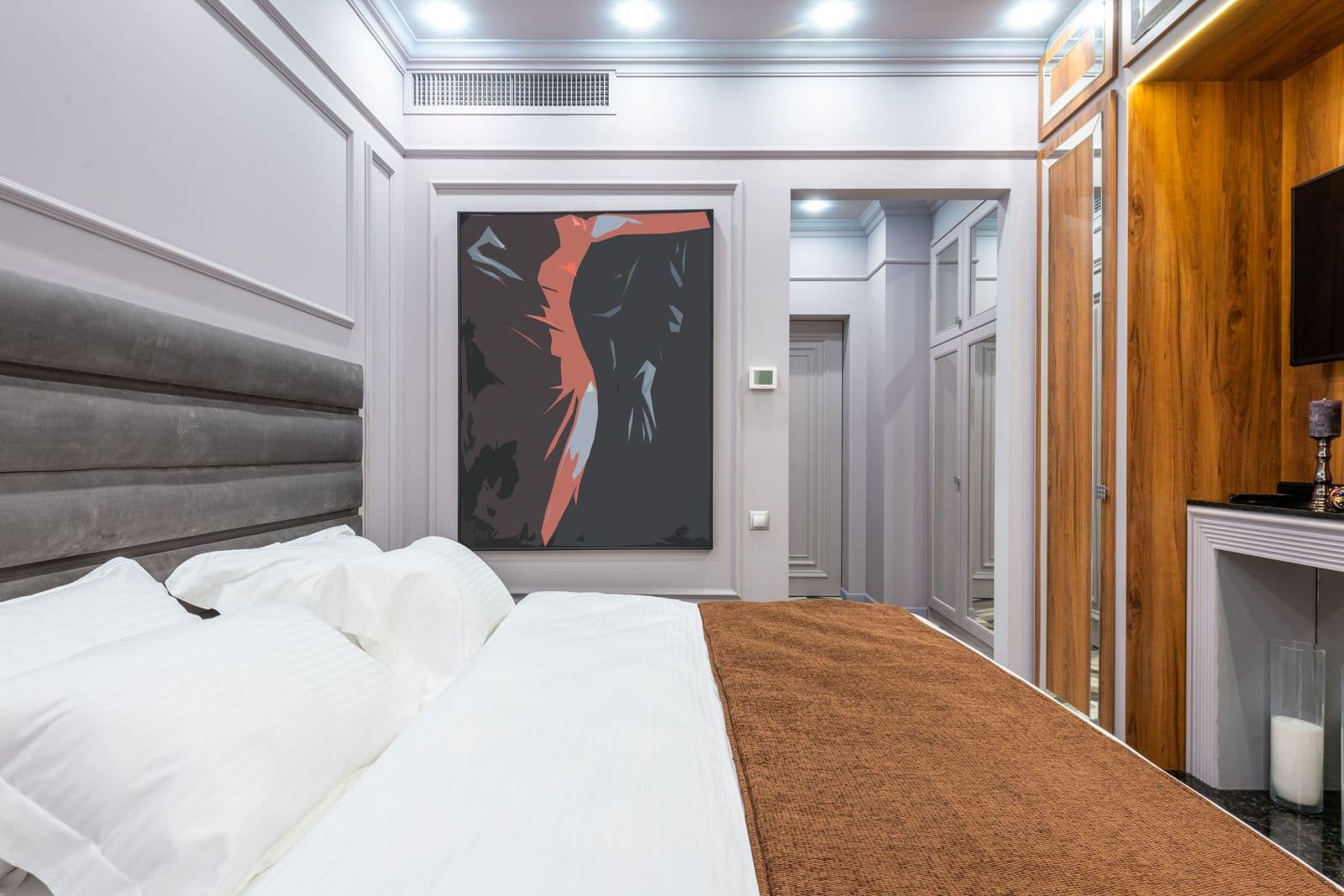
Guest rooms are photographed wide and lived in close, and their art has to serve both. The bed wall is the listing photograph — the same camera-first logic as staging a home with wall art, where generous, neutral pieces carry the photograph — so it earns the room’s main piece: one landscape at a scale that makes the bed look generous rather than stranded, hung a little lower than living-room habit, because the room’s viewer is seated or reclined against it. Secondary walls — the desk, the chair corner — take smaller companions from the same local family, or nothing at all; a guest room with one strong wall and quiet others feels composed, where a room papered in medium pieces feels like a corridor with a bed in it.
Bathrooms in guest rooms follow the hard-format rule already given, with one addition: at mirror distance, guests read detail. Choose the bathroom’s small piece for close viewing — a botanical, a shoreline study — rather than a shrunken version of the big landscape, which at arm’s length just looks like a postcard of the room next door.
Repeat guests and the seasonal turn
Properties with returning guests — the lodge fished every autumn, the rental a family takes each summer — hold one advantage no hotel chain can buy: the room can notice the season with them. A light rotation between two or three standardized pieces per room, swapped as the property itself turns (harbor in summer, the same harbor in storm season), gives regulars the small pleasure of a room that has changed the way the place has changed. It costs nothing in specification, because the sizes and fixings never move — only the image does — and it is the kind of detail that turns a booking into a tradition.
Replacing pieces without drama
Pieces will be damaged eventually — that is not a risk to eliminate but a cost to make small. The trick is standardization. Choose a short list of sizes for the whole property and stick to them, so any room’s replacement is a reprint at a known size, not a fresh design decision. Keep a written record — room, subject, size, supplier, date — and keep the source files. Then a damaged piece is a phone call and a straight swap on the same fixings, and the room photographs identically for the next listing refresh.
Ask any supplier the hospitality questions up front — the questions our guide to wall art sourcing for interior designers frames for any print partner, on proofs, timelines, and terms in writing: can this exact piece be reprinted to match in two years? What are the lead times, in writing? How does the trade program handle multi-room orders and replacements? The answers matter more than the catalog, because you are not buying pictures — you are buying the ability to keep rooms looking identical to their photographs, season after season.
Local subjects, hard formats, locking hardware, and a replacement record: that is the entire discipline of hospitality wall art. Do those four things and your guests will do your marketing for you, one photographed wall at a time.
More in Trade & Designer B2B

Continue exploring: Trade & Designer B2B guides · All guides