

Laundry Room Wall Art with a Light Touch
You visit in short bursts and always stand two feet from the wall, so one simple, bold image beats a scattering of small frames you can never step back from.
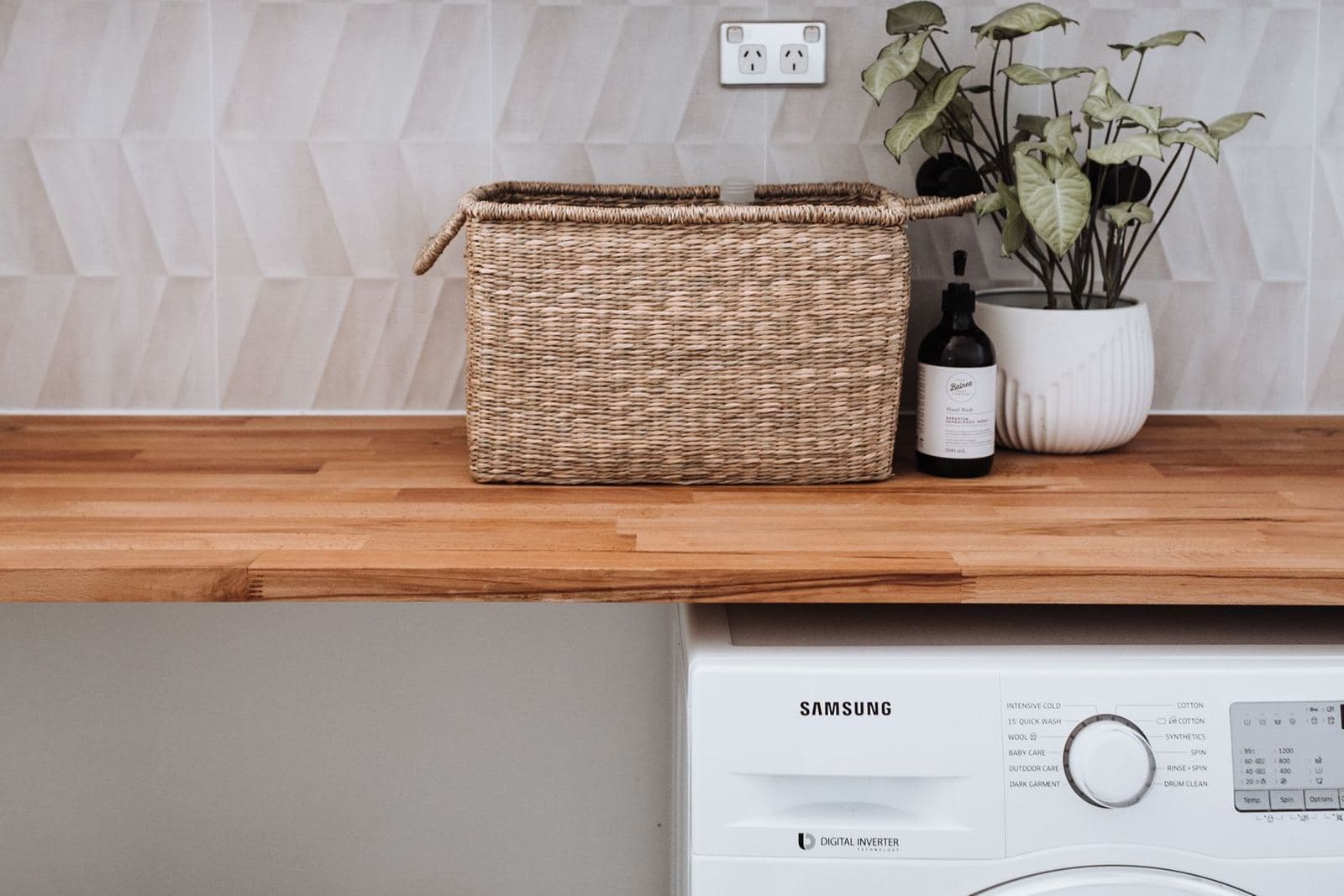
Key Takeaways
- Give the wall you face while working one clear, simple piece and leave the rest bare; a scatter of small frames reads as clutter at two feet away.
- Match the format to the steam: metal is the standout sealed, wipeable choice and acrylic behaves similarly, while unprotected paper under ordinary glass can ripple and mark over time.
- Hang clear of cabinet-door swings, machine-lid arcs and basket routes, use secure fixings on a wall that vibrates, and check what pipes run behind the wall before drilling.
- A short typography piece, a botanical study or a simple landscape can act as the window this often windowless room doesn't have — choose light backgrounds and clear shapes that read at a glance.
The laundry room is the smallest room in most houses and the one nobody thinks to decorate — which is exactly why a single piece of art works so well in it. You spend more time here than you admit, in short, repetitive visits, and the room is usually finished in the plainest materials in the house. One picture, chosen lightly, changes the errand’s mood every single time.
The constraints are real, though: little wall, lots of moisture, and surfaces that get bumped by baskets and bottles. Laundry room wall art succeeds when it respects all three.
Small walls want one clear idea
In a room this size, a scattering of small frames reads as clutter because there is no distance to view them from — you are always two feet away. One piece with a clear, simple image beats four busy ones. Look for the wall you face while you work: usually the stretch above the machines if they sit under a counter or shelf, or the wall opposite the door. That is the wall. Everything else can stay bare without apology.
Scale follows the same rule as anywhere — art that spans a good share of the surface it decorates — compressed to laundry dimensions. A single modest piece centered over a pair of machines, or a narrow vertical piece on the one tall strip of wall beside a door, is the whole composition. When the room has upper cabinets, the gap between cabinet top and ceiling is rarely worth filling; art squeezed into a slot always looks like it is hiding — a small-space discipline shared with wall art for small apartments, where modest walls ask for better editing, not smaller art.
Laundry room wall art subjects with a light touch
This is the one room where a joke is allowed on the wall. Typography art — a single word, a short line of lettering, a vintage-style sign — suits the laundry because the room is all function, and words play against function well. Keep it short enough to read at a glance; you will never stand here long enough for a paragraph.
If words are not your register, botanicals are the other natural fit: a leaf study or a simple floral brings the outdoors into a room that is usually windowless, and reads clean rather than cute. Simple line drawings and single-object studies — a clothespin, a plant in a pot, a row of pegs — hold up at close range where a complex scene would blur into noise. Whatever you choose, this room rewards restraint: one subject, plainly drawn.
Laundry room wall art formats that shrug off steam
Laundry rooms are humid rooms. Dryers vent warmth, sinks splash, and in many homes the water heater shares the space. That rules formats in and out more firmly than taste does. Unprotected paper under ordinary glass can ripple and fox over time in steam; it is the wrong tool here unless the print is properly sealed and framed for it.
Surfaces that handle moisture are the practical shortlist. Metal prints are the standout: the image sits in a sealed, wipeable surface that steam and splashes simply do not trouble, and a quick wipe clears the lint film that settles on everything in this room. Acrylic behaves similarly well. Canvas sits in between — fine in a ventilated laundry room, less happy in a steamy closet with no airflow. Match the format to the room’s actual ventilation, and hang art away from the direct line of any vent or splash zone, whatever you choose — the same climate logic that governs bathroom wall art that handles humidity.
Placement that survives wash day
Hang laundry art like the room is a workplace, because it is. Keep pieces clear of the swing of cabinet doors and the arc of the machine lids; leave room for baskets to pass without brushing the wall; and think twice before hanging directly above machines that vibrate on a spin cycle — a picture on that wall can walk itself crooked over a month of loads. Secure fixings, checked once in a while, beat a nail and hope in a room that hums.
Height follows the worker, not the gallery: center the piece at the eye level of someone standing at the machines, which is ordinary eye level — this is a standing room, and nobody views its art from a chair.
Art as the window the room does not have
Many laundry rooms are interior rooms — no window, flat light, white machines. Art is often the only thing on the wall that suggests an outside. A simple landscape, a garden study, or a single plant portrait gives the eye somewhere to rest that is not a dial or a detergent bottle, and it works at the distance this room allows if the image is bold enough to read in a glance. Choose light backgrounds and clear shapes; fine detail and dark palettes get lost under laundry lighting, which tends to be bright, flat, and unflattering to anything subtle.
If the room does have a window, hang the art where it is not in daily competition with the light: on the wall beside the window rather than opposite it, so you are not looking at a reflection of the glass every time you load the machine.
The ledge option and the leftover spots
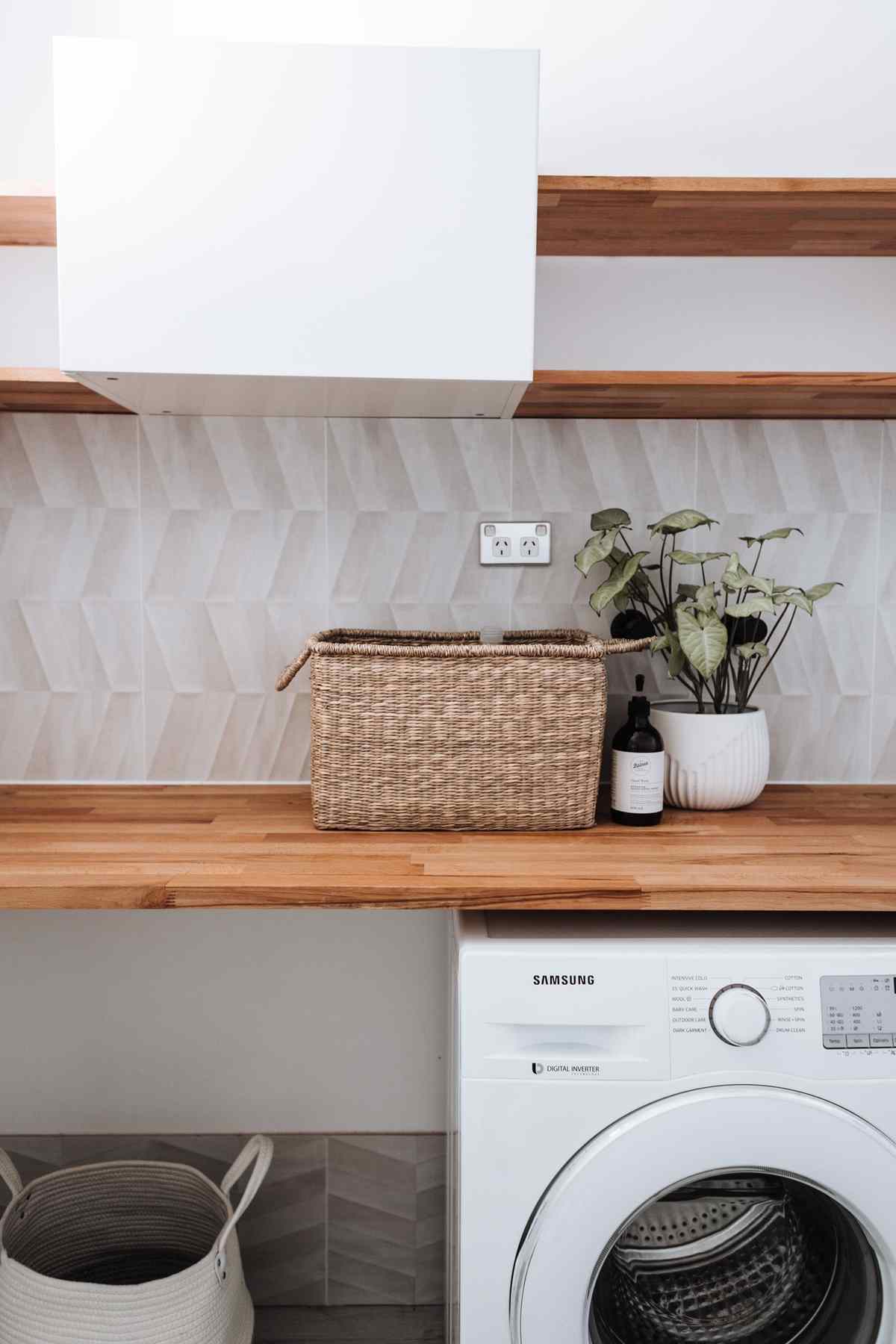
Where wall space is broken up by cabinets, meters, and pipe covers, a shallow ledge or the top of a run of cabinets can hold a small piece leaned rather than hung — useful in a room whose walls are more obstacle course than canvas. Leaning keeps fixings out of walls that hide plumbing, which in this room is a genuine consideration: before drilling anywhere in a laundry room, be sure you know what runs behind the wall. Water pipes and laundry walls are old friends, and a misplaced screw here costs more than a crooked picture.
The other honest spot is the door itself, or the wall the door hides when open — visible for the whole of every visit, since you work facing it, and untouched by steam and splashes from the sink. Measure with the door open as well as closed; the wall behind an open door is found space in most small rooms.
The room as a whole
Because the room is small, the art does not need to match anything — there is barely anything to match. It can be the one bright thing in a white room or the one calm thing in a patterned one. The laundry room wall art hub gathers the room’s options in one place. Choose the piece that makes you mind the room least, hang it where the steam cannot reach it, and let the smallest room in the house be the one that makes you smile on the way through. The largest room works by the opposite scale, and living room wall art, from sizing to hanging sets out its rules.
More in Room Guides
Continue exploring: Room Guides guides · All guides