

Animal Wall Art: Portraits With Presence
An animal on the wall looks back, so choosing one is closer to inviting a resident than picking a view. Portrait or in-the-wild, scale and temperament come first.
Key Takeaways
- Make the portrait decision first: a single portrait meeting the room's gaze brings the most presence but needs a sharp image and placement at eye level on a wall the room actually faces, while in-the-wild images behave more like calmer landscapes with a heartbeat.
- Scale is presence: for a portrait meant to hold a wall, the head should approach the dimensions of the living animal, because a lion at postcard scale is a sticker and at thirty inches is a presence.
- Match temperament to room: predators bring gravity and awe, grazers and herd animals bring calm mass that suits family rooms, and small quick animals such as hares, foxes and owls bring wit.
- Ask where the image came from: whether the animal was wild or captive presented as wild, and whether it was baited, flushed or stressed for the shot — and treat vague answers as information about the seller.
- In children's rooms choose gentler subjects such as a foal, fawn or hare, hang them at the child's eye level in durable, wipeable formats, and let the child do the choosing whenever the choice is theirs.
Every other subject in this series is something you look at. An animal looks back. That single fact — eyes, awareness, a creature with its own business — gives animal wall art a presence no landscape or still life can match, and makes choosing it a slightly more serious act: you are not decorating with a view, you are inviting a resident. This guide covers the great choice between portrait and in-the-wild imagery, the scale that presence requires, the honest questions worth asking about where animal images come from, and the rooms each kind suits.
The animals-and-wildlife category is a family with specialists inside it — the herds of the savannah have their own guide in this series — safari wall art — and birds their own again, in our guide to bird wall art. What follows is the general craft that applies to the whole family before those specialties begin. Animals are one family in the full survey of wall art subjects, if you want to weigh them against landscapes and botanicals first.
Animal wall art portraits: the encounter
The animal portrait isolates one creature, usually the head and shoulders, usually meeting the camera’s gaze. It is the most powerful format in the subject and the least forgiving. A great wildlife portrait has the charge of the great human ones — character legible in a face: the lion’s patience, the fox’s opinion of you, the highland cow’s amiable fringe and total indifference. Hung well, a portrait becomes the room’s second inhabitant; people lower their voices near the good ones, and children name them.
Portraits demand two things. First, quality of image: the entire effect lives in the eyes and the fur, so a soft or over-enlarged file collapses into decoration at exactly the point it should come alive. Second, confidence of placement: a portrait is a face, and a face wants to be met — at standing or sitting eye level, on a wall the room actually faces, not marooned high in a corner where the gaze goes over everyone’s heads to nobody. If the eyes in the picture cannot find the eyes in the room, the encounter never happens.
Animal wall art in the wild: the animal in its world
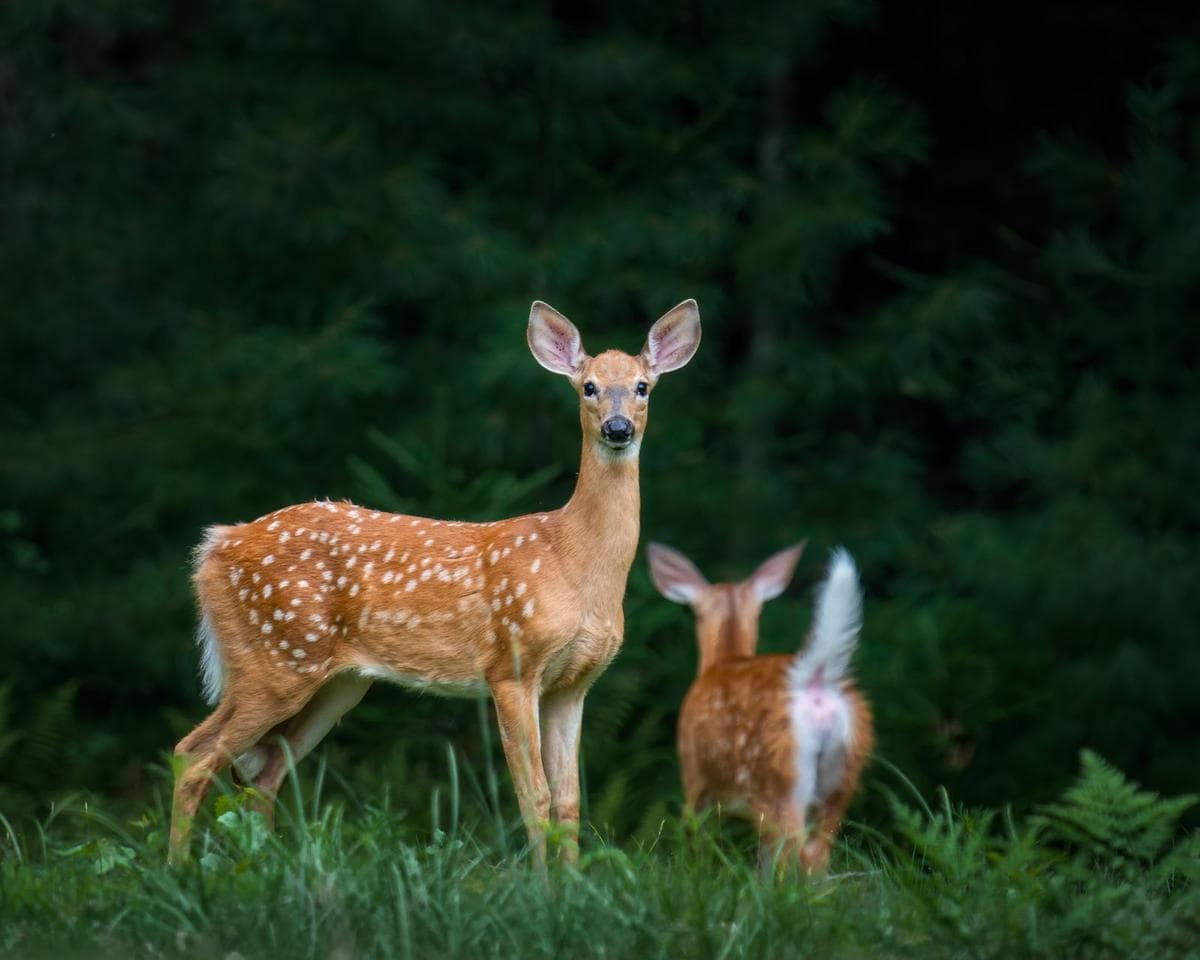
The alternative shows the animal in its landscape — elephants in dust at a waterhole’s distance, a deer at a wood’s edge, horses running a fence line with weather coming. In-the-wild images ask less and give differently: the animal is an event inside a scene rather than the scene itself, so the picture behaves more like a landscape with a heartbeat — calmer, easier to place, kinder to rooms that already have a focal point. They reward the animal lover who wants the world the creature lives in, not only the creature; they also suit viewers who find the portrait’s gaze, sustained across a whole room and a whole evening, a degree too much company.
Between the two sits the small-group image — the pair, the mother and young, the herd’s front rank — which trades the portrait’s intensity for story. Two animals relate, and the relating is the picture. Group images are the warmest of the family and the natural choice for family rooms, where a single stern patriarch of a portrait might be magnificent but is nobody’s idea of kin.
Scale is presence
Animals have a true size, and the picture’s size speaks it. Print a horse’s head at life scale or beyond, and the room gains an animal; print it at a quarter scale, and the room gains an illustration of one. Neither is wrong — miniature animal studies, engraved and framed in rows, have a cabinet-of-curiosities charm of their own — but know which contract you are signing. Presence requires size: for a single portrait meant to hold a wall, the head should be at least approaching the dimensions of the living original. A lion at postcard scale is a sticker; the same lion at thirty inches is a presence that changes how the sofa feels.
The corollary governs small animals. A hare, a fox cub, a robin blown up to the size of a door becomes monumental and slightly surreal — a deliberate, often delightful effect in modern rooms — while at natural size it stays the modest, charming thing it is. Monumental small animals are a style decision; make it on purpose, or not at all.
The ethical questions worth asking
Animal imagery comes from somewhere, and a buyer who loves animals is entitled to ask where. The questions are simple and any honest seller should welcome them. Was the photograph taken of a wild animal in its own place, or of a captive one presented as wild? Was the animal baited, flushed, or stressed for the shot — practices wildlife-photography ethics codes have long discouraged? For illustrated and painted animals, no animal was involved at all, which is its own clean answer. None of this requires expertise to ask about, and the answers — or the absence of them — tell you as much about the seller as about the picture. Conservation-minded buyers also often look for work whose sale supports the habitat in the frame; where a seller makes such a claim, it should be specific enough to check.
A gentler version of the same question applies at home: is this animal one you honor, or one you merely find decorative this season? Animal art keeps longer than most subjects because the attachment is to a creature, and the pieces people keep for decades are almost always the ones chosen the way you would choose a dog’s portrait for the hall — because it is that one.
Presence has a temperament
Animals differ in the emotional weather they bring, and the weather lasts as long as the picture hangs. The great predators — lion, tiger, wolf, bear — bring gravity and a measured threat, magnificent in rooms that can use a little awe and slightly comic in rooms that cannot: a wolf over a pastel nursery dresser is a category error, however fine the photograph. The grazers and herd animals — deer, horses, elephants, Highland cattle — bring calm mass and patience; they are the peacemakers of the subject and the safest large presences in family rooms. The small quick animals — hares, foxes, owls, hedgehogs — bring wit: alert, bright, a little mischievous, the punctuation rather than the paragraph. Match temperament to room as you would match a guest to a dinner: the apex portrait is a splendid guest who must be seated where the evening wants weight, not where it wants ease.
Temperament also explains the monochrome question. Stripped of color, every animal becomes more formal and more emblematic — less a creature met, more a character contemplated — which is why black-and-white suits predators and portraits of gravitas, and why the warm, funny, beloved animals (the shaggy cow, the foal, the hen with her chicks) usually want their color kept. Color is the animal’s weather and coat; remove it only when the structure underneath is the point.
The domestic tradition: horses, hounds, and the farm
Half of animal art is not wildlife at all. The horse, the dog, the farm herd, and the yard hen carry a tradition of their own — painted for centuries by and for the people who lived with them, from sporting art’s proud, glossy hunters to the humble barnyard study. Domestic animal art brings what wild art cannot: familiarity. A horse portrait in a hall is not about the species; it is about horses, and everyone who has kept one reads it as kinship rather than decoration. Farm animals bring humor and humility in equal measure — the cow is the great comic subject of the animal world, all curiosity and fringe — and the whole domestic family is the natural art of country kitchens, mudrooms, and any house where the outdoors is a workplace rather than a view. Choose domestic subjects when the room’s story is a life lived with animals; choose wild ones when it is a world visited and admired.
Rooms animals suit
The living room takes the statement portrait, given the wall and the eye contact it needs. Studies and offices take the in-the-wild scene and the monochrome portrait — black-and-white animal photography, all structure and stare, is the most grown-up version of the subject and flatters book-lined, wood-toned rooms. And the kids’ room is where animal art does its longest service: a child’s chosen animal, hung at a child’s eye level, becomes companion, guardian, and the first piece of art they ever truly owned. Choose gentler subjects there — the foal, the fawn, the hare, the bear cub at a respectful remove — and durable, wipeable formats, and let the child do the choosing whenever the choice is theirs to make. An animal picked at six and kept through sixteen is not decor; it is biography.
To choose animal wall art well, then, run the short list this subject asks for: portrait or world, presence or calm, wild or domestic — and the animal whose temperament matches the room’s own. Every other subject on the wall is something you own; an animal, chosen right, is something you live with, and it starts, like everything in this subject, with a pair of eyes meeting yours from the wall.
More in Subject Guides



Continue exploring: Subject Guides guides · All guides