

Peacock Wall Art: Jewel Tones and Drama
This is the subject that performs rather than whispers. One jewel-toned piece, a calm wall around it and no rivals is usually the whole recipe.
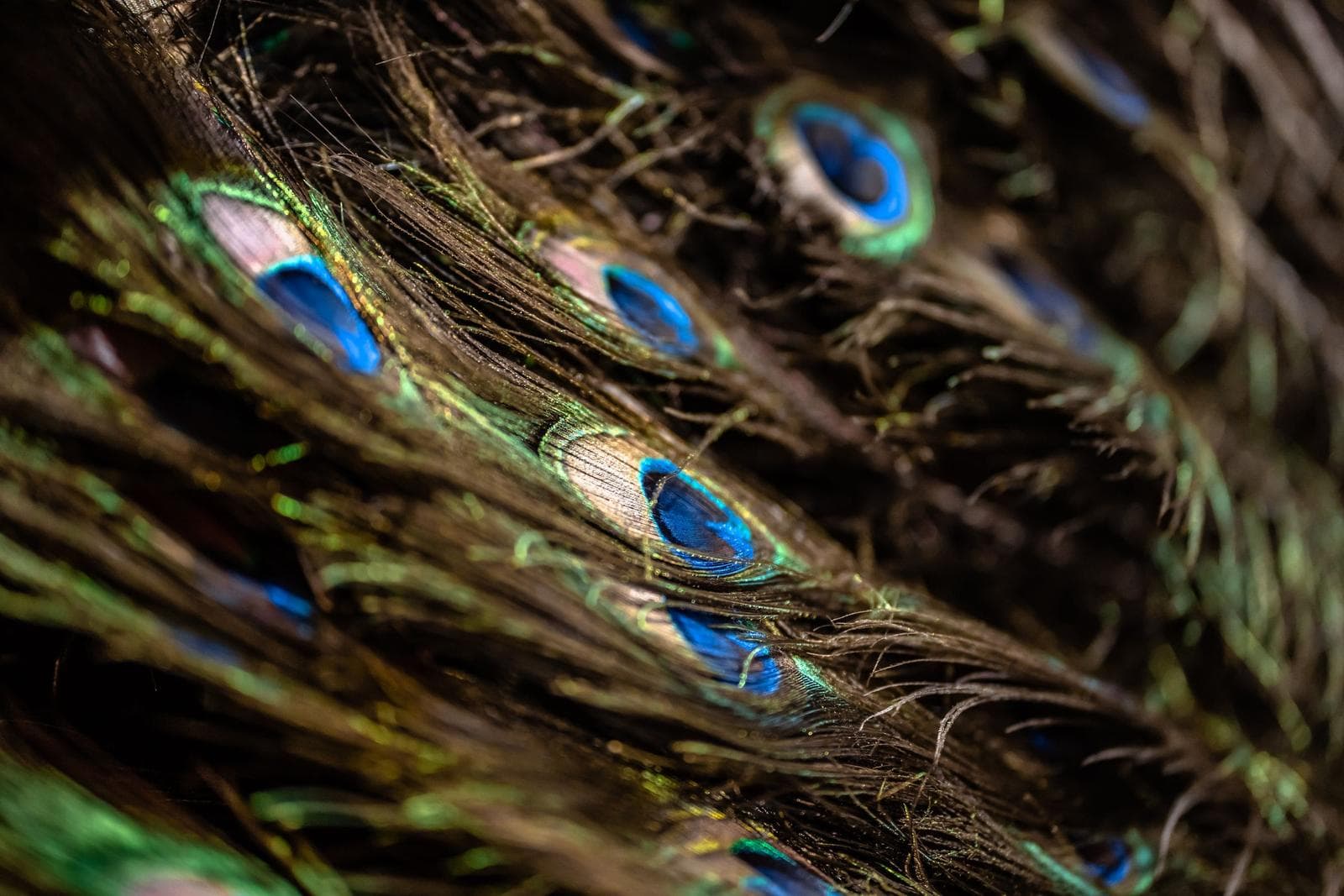
Key Takeaways
- Hang one statement, not two: a displaying train is a complete, radial composition, and two peacocks in one room tend to duel, so let any further echo be small and abstract, such as a feather detail in a cushion fabric.
- Go large or crop in: printed small, the train compresses into busy texture and the eye spots turn to polka dots, while a cropped head, crest and neck portrait stays legible at modest sizes.
- Give it a calm field: the jewel tones of teal, emerald, sapphire and bronze glow against cream, charcoal, warm grey or deep navy, but against an already saturated wall the same piece can tip into visual noise.
- Match the room to the register: dining rooms and entryways take the full display well, while bedrooms should take muted treatments only — a watercolor, a vintage plate, or a single feather study.
- If you love the palette but not the performance, hang the feather alone: a single train feather at large scale keeps the eye motif and reads as pattern, behaving beside other art and in pairs.
Some subjects whisper. The peacock is not one of them. A displaying peacock carries one of the most ornate patterns nature ever produced — a fan of iridescent feathers, each ending in an eye of bronze, green, and deep blue — and it brings that ornament with it onto the wall. Peacock wall art is therefore a deliberate choice: you are not filling a blank space so much as hiring a performer. Handled well, it gives a room a single, jewel-like focus. Handled carelessly, it shouts over everything else in it.
The good news is that the peacock does most of the styling work for you. Its palette is built in, its pattern is unmistakable, and its silhouette reads clearly from across a room. Your job reduces to three decisions: how much of that drama the room can hold, which treatment of the bird you choose, and what you pair it with so the piece looks intentional rather than imported from a different house. The peacock is the drama end of the subject families this series maps — most subjects whisper where this one performs.
Peacock wall art: a palette already composed
The classic peacock image is a study in jewel tones: teal and emerald in the train, sapphire and indigo at the neck, with bronze, copper, and antique gold threaded through the eye spots. Those colors sit opposite warm neutrals on the color wheel, which is why a peacock piece glows against cream, charcoal, warm grey, or deep navy walls — the background does not compete, it frames. Against an already saturated wall, the same piece can tip into visual noise, so the calmer the field around it, the richer the bird looks.
Not every peacock image runs at full saturation. Softer treatments exist — the bird rendered in muted watercolor, in vintage plate style with restrained hand-coloring, or as a single feather studied up close, all pattern and no posture. These quieter versions keep the unmistakable eye motif while lowering the volume, and they are the ones to consider for bedrooms and other rooms that are supposed to slow you down. Decide which register you want first; the subject stays the same, but the room’s energy does not.
One statement is usually enough
The peacock’s great decorating risk is repetition. A displaying train is a complete composition — radial, symmetrical, and demanding — and two of them in one room tend to duel. The reliable pattern is one strong piece, given clear space around it: a single large print above a sideboard, a fireplace, or a console, with the surrounding wall left quiet. If you love the motif and want more of it, let the echo be small and abstract — a feather detail in a cushion fabric, a brass accent — rather than a second bird.
Scale matters for the same reason. The train’s pattern needs room to resolve; printed small, the feathers compress into busy texture and the eye spots turn to polka dots. A peacock rewards size the way a landscape rewards width: go as large as the wall honestly allows, or choose a cropped portrait treatment — head, crest, and neck in deep blue — which stays legible at modest sizes because it trades pattern for presence.
The company it keeps: deco and maximalist rooms
Peacock imagery has a natural ally in art deco style. The deco era adored this bird — its fan maps neatly onto the sunburst and fan motifs of the period, its jewel tones match deco’s palette, and its stylized geometry suits the way deco artists drew animals: less specimen, more emblem. A peacock piece in a room with brass, lacquer, mirrored surfaces, or geometric pattern is not a theme; it is a period conversation, and it looks entirely deliberate.
Maximalist rooms take the bird differently — as one rich layer among many. There, the rule is contrast of scale: the peacock piece should be among the largest patterns in the room, with smaller prints and textiles in supporting roles, so the eye knows where to land first. In a minimalist room, by contrast, a single saturated peacock can serve as the room’s only color event — a legitimate and striking strategy, provided everything else genuinely stays quiet. Arranging that abundance without tipping into clutter is the craft of maximalist wall art, arranged with confidence, which has its own guide in this series.
Rooms that can hold peacock wall art
The dining room is the peacock’s most natural stage. Dining rooms are used in the evening, lit warmly, and organized around a table the way a stage is organized around a set — ceremony is already in the room’s job description, and a jewel-toned bird above a sideboard simply agrees with it. Candlelight and lamplight are kind to iridescent color; the piece will look richer at 8 p.m. than at noon, which is when a dining room is seen.
The entryway is the second strong placement, for the opposite reason: an entry is seen briefly, by people standing, often as the single first impression of the house. A subject this confident survives a ten-second viewing — the fan reads instantly — and it promises guests that the rest of the home will not be timid. A living room takes the peacock well when the seating is upholstered in the calm neutrals the palette wants, and a bedroom should take the muted treatments only: the bird at full fanfare is a performer, and most people sleep better across from a portrait detail than a full display.
The feather alone
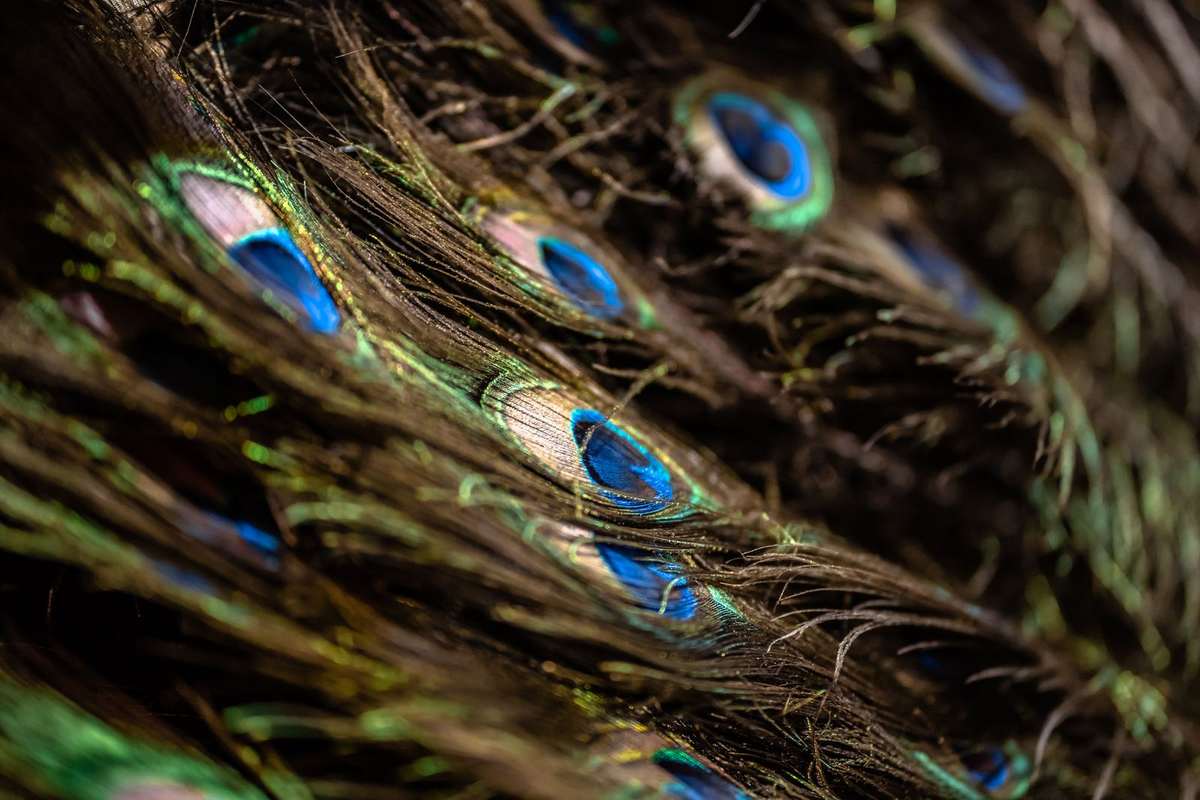
One elegant escape from the whole drama question is to hang the feather instead of the bird. A single train feather, photographed or drawn at large scale, keeps the eye — that extraordinary piece of natural design, bronze and green and midnight blue — while dropping the posture and the performance. Feather studies read as pattern and ornament rather than portrait, so they behave in rooms where the full bird would compete: beside other art, in pairs, in a powder room that wants one gorgeous thing. If you love the palette but your room is already furnished with strong pieces, the feather is how you bring the peacock home without starting an argument.
Choosing the treatment
Three broad treatments cover most peacock wall art. Photographs deliver the true iridescence and suit contemporary rooms; look for a clean background, because a cluttered garden behind the bird flattens the fan into the foliage. Vintage-style plates — the bird posed against a plain ground, in the tradition of natural-history illustration — bring formality and pair well with traditional furniture and dining rooms. Stylized and decorative treatments push the bird toward pattern: gold line on deep teal, repeating feathers, motifs rather than a creature. These read as design first and subject second, which is exactly right for deco and maximalist schemes. Those plate and portrait treatments are shared with bird art more widely, from field-guide plates to flocks, where the peacock is simply the loudest member.
The peacock sits inside the wider family of bird art, but it is the family’s extrovert — where most bird images lighten a room, this one enriches it. Choose it when a room feels tasteful but flat, when a dining room wants ceremony, or when an entryway deserves a first impression with some theater in it. Give it a calm field, a generous size, and no rivals, and the drama you invited will behave like a host rather than a guest who will not leave.
More in Subject Guides





Continue exploring: Subject Guides guides · All guides