

Dining Room Wall Art: The Table's Backdrop
Diners look for a long time, from chairs, in warm low light — so this room breaks the standing eye-level rule and rewards art built for slow looking.
Key Takeaways
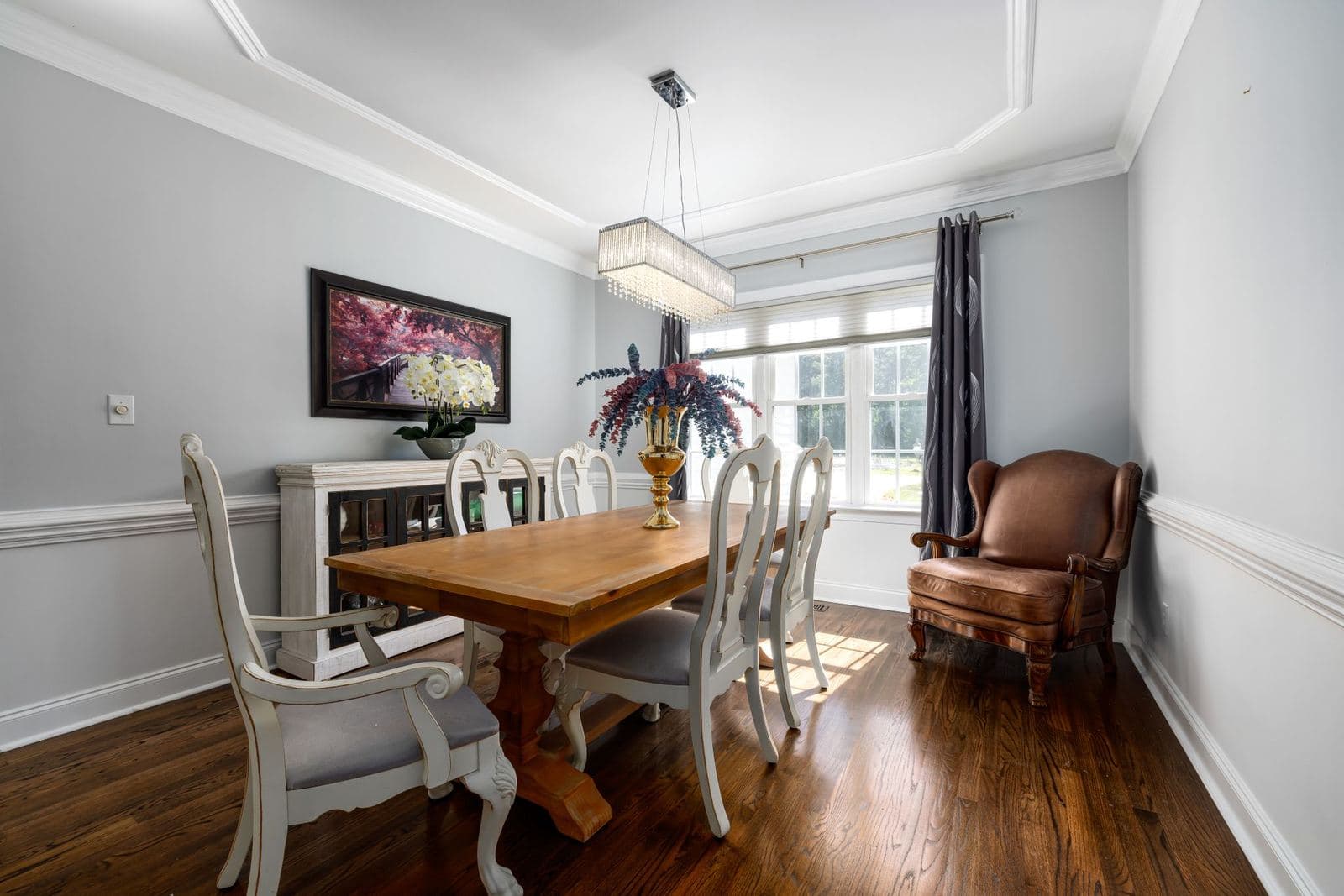
- Hang dining art for seated viewers: aim the centre around 48 inches on a bare wall, or 6 to 8 inches above a sideboard, then test it sitting in a dining chair.
- Size the main piece to roughly two-thirds of the sideboard's width — about 40 inches for a 60-inch sideboard — or two-thirds of the table's length if there is no sideboard.
- Still life and landscapes suit the room because they reward slow looking without competing with conversation; avoid violent, queasy or very busy images you'll face through dinner.
- Framed canvas avoids chandelier glare because its face stays matte; test glazed pieces from the chairs and move or re-glaze one that reflects the fixture all meal.
The dining room makes an unusual demand of its art: it is looked at for a long time, from a seated position, in warm low light, by people whose attention drifts between the food, the company, and the walls. Art that flourishes there is art that rewards slow looking and never fights the meal. For the browse view, see dining room wall art; this guide covers the sideboard wall, the seated eye-level rule that dining rooms obey instead of the standard one, and the subjects that have kept diners company for centuries.
Dining room wall art starts at the sideboard wall
Most dining rooms have one natural art wall: the long wall behind the sideboard or serving credenza. It is the backdrop to every meal, the first thing seen from the doorway, and usually the room’s largest uninterrupted stretch. Size its art by the furniture rule — the piece or arrangement should span roughly two-thirds of the sideboard’s width. A 60-inch sideboard wants about 40 inches of art; a 72-inch sideboard wants about 48. Count a pair as one arrangement, gaps included, with the same consistent 2- to 3-inch spacing you would use anywhere.
Choose between one statement piece and a pair by the room’s temperament. A single large piece gives the room a settled, formal calm and asks for one decision. A matched pair — two studies, two landscapes, two halves of a quiet diptych — suits rooms that already have symmetry in their bones: paired sconces, paired windows, a centered table. What rarely works is a small piece centered apologetically over a long sideboard; if the budget or the art runs small, hang two or three in a deliberate row rather than one in lonely isolation — the broader choice is framed in one statement piece or a gallery wall.
No sideboard? The rule still works
Plenty of dining rooms have no sideboard — the long wall stands bare behind the table, or a hutch and chairs divide it. The furniture to measure against is then the table itself: center the art on the table’s length, and size the piece to about two-thirds of that length, so a 72-inch table carries roughly 48 inches of art. A low, wide horizontal suits the geometry — the eye travels it the way it travels the table. Where a window or door breaks the wall into panels, treat each panel as its own small wall and hang a matched pair or a series of small studies, one per panel, aligned by their centers. Alignment is what makes separated pieces read as one decision.
In a very small dining area — the end of a kitchen, a bay window’s embrace — one modest piece beats a brave one. Small dining spaces are viewed from close up and across a table crowded with the meal itself; art there should be a companion at conversation distance, not a mural. Detail is your friend at that range, which is another reason the still life and the botanical study are this room’s enduring citizens.
Hang it for seated viewers
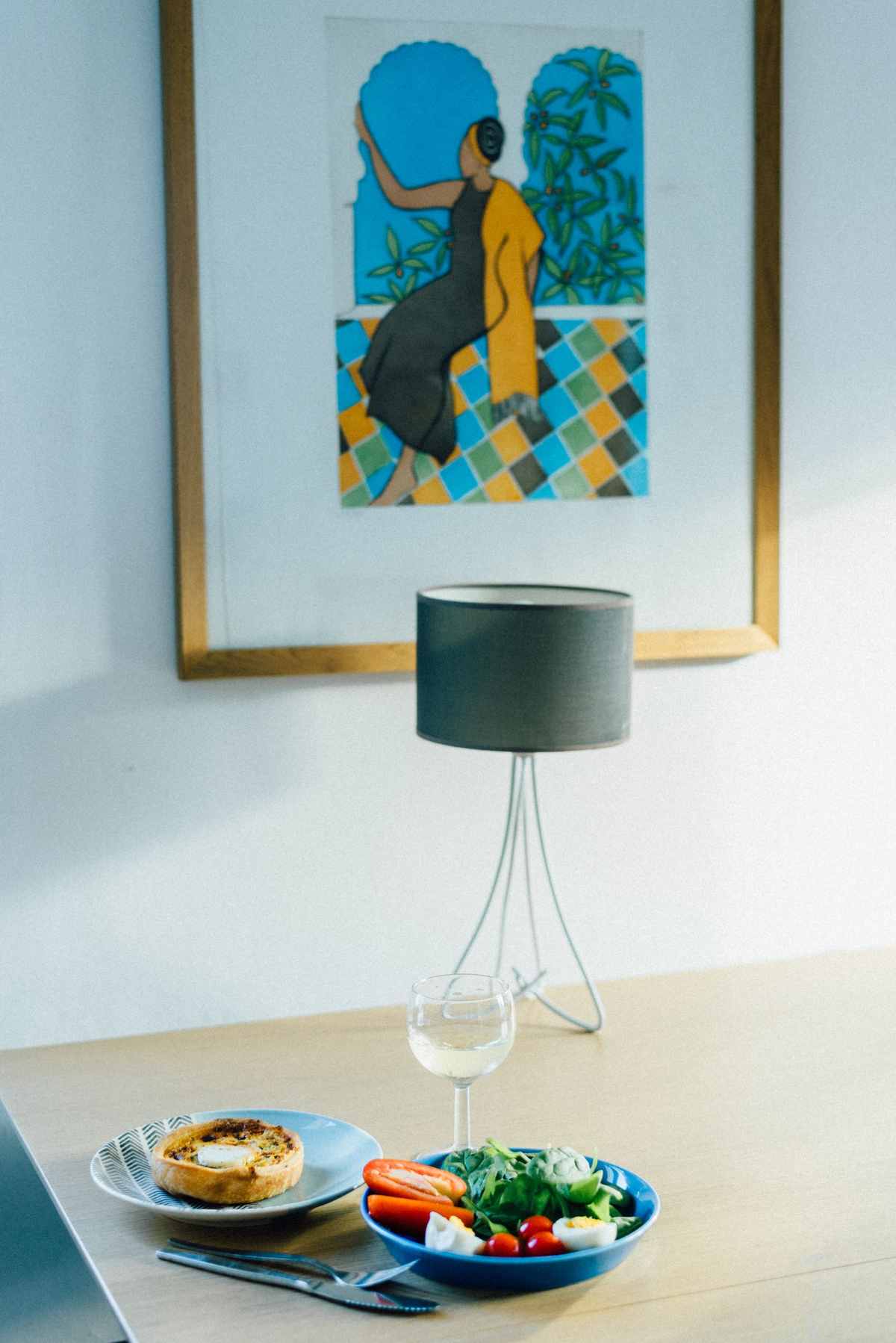
Here the dining room breaks the standard rule. The gallery standard — center at 57 to 60 inches — assumes a standing viewer. Diners are seated, and seated eye level is roughly 44 to 48 inches from the floor. Art hung to the standing rule in a dining room spends every meal floating a foot above everyone’s sightline, disconnected from the table it is meant to accompany. Hang dining art lower: relative to the sideboard, the bottom edge belongs about 6 to 8 inches above its top surface, and on a bare wall, aim the center around 48 inches — just above seated eye level — and then do the only test that matters — sit in a dining chair and look at it.
The seated test catches two things numbers cannot. It shows whether the piece clears the sightline across the table, so guests see art rather than a frame edge behind each other’s heads. And it reveals the chandelier problem: from a chair, a glass-fronted piece may hold a perfect, glaring reflection of the light fixture for the entire meal. Better to learn that with tape on the wall than with a drill.
Dining room wall art subjects that suit a long meal
One genre was quite literally invented for this room. Still life — fruit, vessels, bread, flowers arranged and observed — grew up on dining room walls, and it still belongs there: it rhymes with the table below it, it rewards the slow looking a long meal provides, and its quiet drama never competes with conversation, as our guide to still life wall art, the quiet genre that feeds a room shows. Landscapes are the other natural: a view with depth gives diners’ eyes somewhere to travel, and a horizon sits comfortably at seated height. Calm abstracts work when their palettes echo the room.
Dining subjects to handle with care: anything violent, queasy, or frantic will be stared at through dinner whether it suits the appetite or not. Hunting scenes hung for tradition have ended more modern meals than they have graced. And extremely busy images — dense crowds, chaotic collage — tire the eye across a two-hour sitting. The dining room test mirrors the bedroom test in a different key: could you look at this happily, nightly, mid-conversation, for years?
Evening light and the glare problem
Dining rooms are evening rooms. Their art is judged by lamplight, candlelight, and the dimmer switch, under which warm palettes glow and cool ones recede — test candidates in that light, not in the morning. The format that consistently wins here is framed canvas: the frame gives the formality the room likes, the canvas face stays matte, and there is no glass to turn the chandelier into a second sun in the middle of the painting. Paper under glass is lovely in a daylit dining room but should be hung where the central light strikes it at an angle, never square-on opposite the fixture. If a beloved piece glares from every chair, the honest fixes are a matte glazing swap or moving it to the wall beside the fixture rather than across from it.
Lighting the art itself
Because the dining room’s main viewing happens after dark, a little deliberate light transforms its art. A picture light over the main piece — the small brass bar of tradition, or its modern equivalents — pools a warm wash down the face and makes the sideboard wall glow like a stage at exactly the hour the room is used. Downlights already in the ceiling can do the same work if they are aimed, or can at least be dimmed into agreement. Even without fixtures, placing the main piece where the room’s lamps reach it indirectly, rather than in the one unlit corner, is the difference between art that attends dinner and art that merely stores there. Whatever you add, keep it warm in tone and dimmable: dining light should flatter faces first and pictures a close second, and the same warmth that flatters one flatters the other.
The supporting walls
With the sideboard wall leading, the remaining walls support. The wall behind the host’s chair takes a single modest piece well — it frames the head of the table in photographs and in person. Narrow walls between windows suit verticals and matched pairs of small studies. A series — three or four small related prints in a row along a long wall — suits rooms that host often, giving returning guests something that unfolds along the meal. Keep the hierarchy clear: one wall at full voice, the rest at a murmur, and at least the corners left quiet. A dining room where every wall argues is a room where nobody lingers, and lingering is the entire purpose of the place.
Size the main wall by the sideboard, hang for the seated eye, choose subjects built for slow looking, and mind the evening glare — and dining room wall art will do what it has done since still lifes were invented: make people stay at the table a little longer. The room diners drift to afterward follows different rules again — standing eye level, the sofa as anchor — set out in living room wall art, chosen, sized, and hung.
More in Room Guides
Continue exploring: Room Guides guides · All guides