

Still Life Wall Art: The Quiet Genre
Because every object was chosen and placed, a still life settles a wall — especially where you sit for a long meal and see it up close, in lamplight.
Key Takeaways
- Use still life where calm and close looking matter: its total balance of weight, dark, and bright settles a wall, and table-sized subjects feel true even at modest print sizes
- Choose the tradition for the room: classical pieces in deep shadow and warm, low colour suit traditional dining rooms, while modern pieces with fewer objects and pale grounds suit bright, spare kitchens and dining spaces
- Hang dining-room pieces at seated eye level rather than standing height, since diners view art seated, at close range, for long stretches
- Give framing depth: a deeper frame and generous mat acts like the edge of a table for classical work, while modern minimal pieces suit thin frames with no mat
Still life is the oldest quiet genre in painting: a table, a few objects, and all the drama supplied by light and attention. No landscape to travel into, no face to meet — just fruit, vessels, flowers, bread, and glass, arranged and looked at hard. That restraint is exactly why still life wall art feeds a room so well. It does not demand a response or tell a story you must follow; it lowers the pulse of the wall it hangs on. This guide stays with the still life subject itself: what the classical and modern traditions each offer, why the genre belongs where food is served, and how framing gives a small arrangement real presence. It is one entry in the wider map of wall art subjects; here, the table is the whole world.
Why still life wall art holds a wall
A still life is a composition in the purest sense. The artist chose every object, placed every object, and lit every object, so nothing in the picture is accidental. That total control produces images of unusual balance — weight answered by weight, dark answered by bright, a tall vessel steadied by a low bowl. On a wall, balance reads as calm. Rooms where people gather to eat, talk, and linger benefit from art that settles rather than stimulates, and a still life settles a wall the way a set table settles a room: everything in its place, nothing shouting.
There is also a scale honesty to the genre. Its subjects are table-sized, so a still life printed near life size feels true — a pear the size of a pear, a jug the size of a jug. That fidelity makes even a modest print feel substantial, and it is why still lifes reward smaller walls and closer viewing distances where grander subjects would overwhelm.
The classical tradition: abundance in shadow
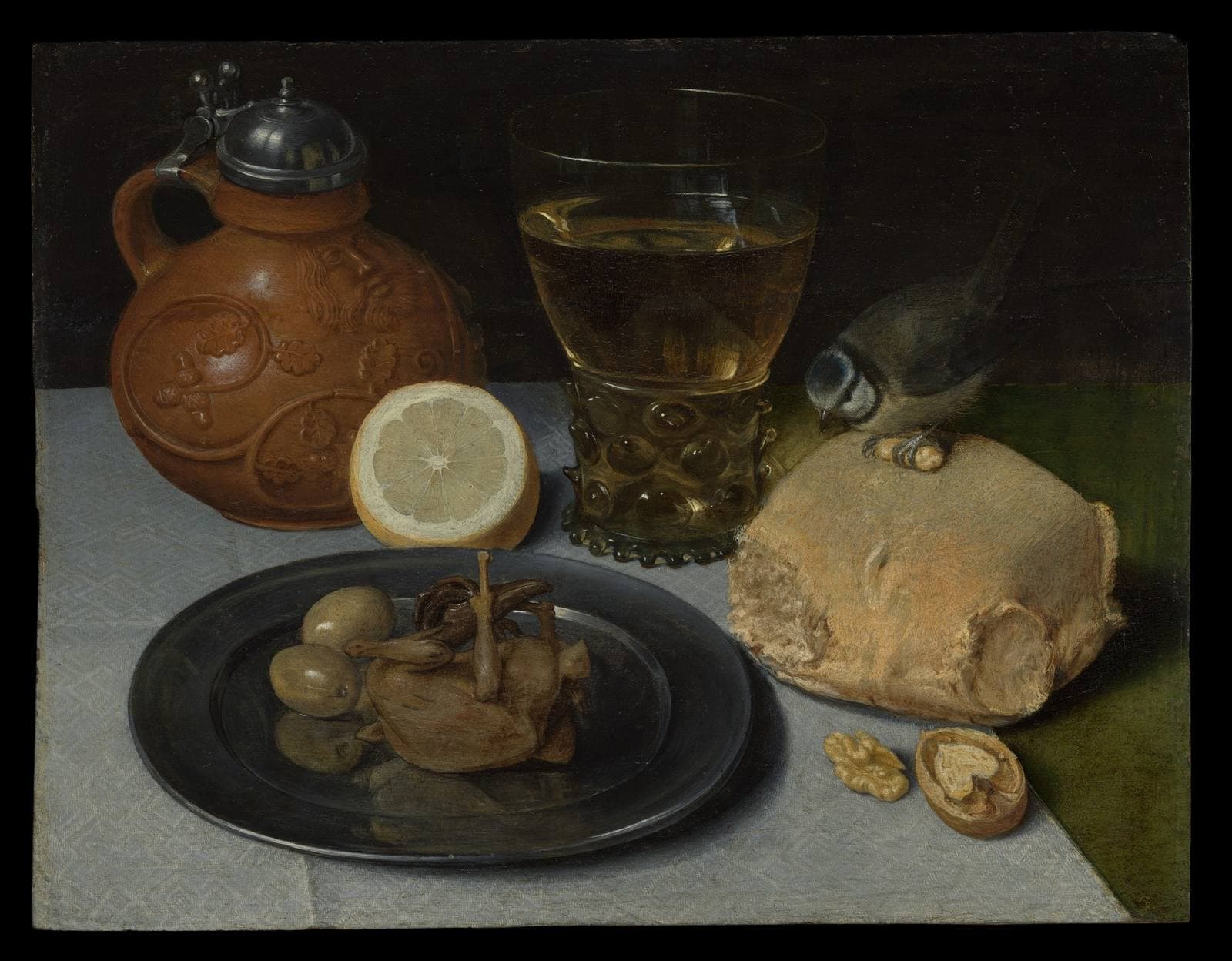
The classical still life — the Dutch and Flemish table pieces above all — works in deep shadow and concentrated light. Pewter catches a window’s glow; a lemon peel unwinds in a spiral; bread, cheese, and game are piled with deliberate abundance. These images carry gravity and a little theater, and they hang magnificently in rooms with traditional bones: dark wood, upholstered chairs, meals that last. Their palette is warm and low — umber, ochre, bone, deep green — which makes them natural partners for dining rooms that run to candlelight.
Classical still lifes also carry symbolism for viewers who enjoy it: wilting flowers and watchful skulls in the vanitas tradition are meditations on time wearing a feast’s clothing. You need not hang a meditation on mortality over dinner — plenty of the tradition is pure celebration of plenty — but knowing the layer exists explains the genre’s depth. These are pictures that keep meaning something after the hundredth viewing.
The modern still life: fewer objects, more air
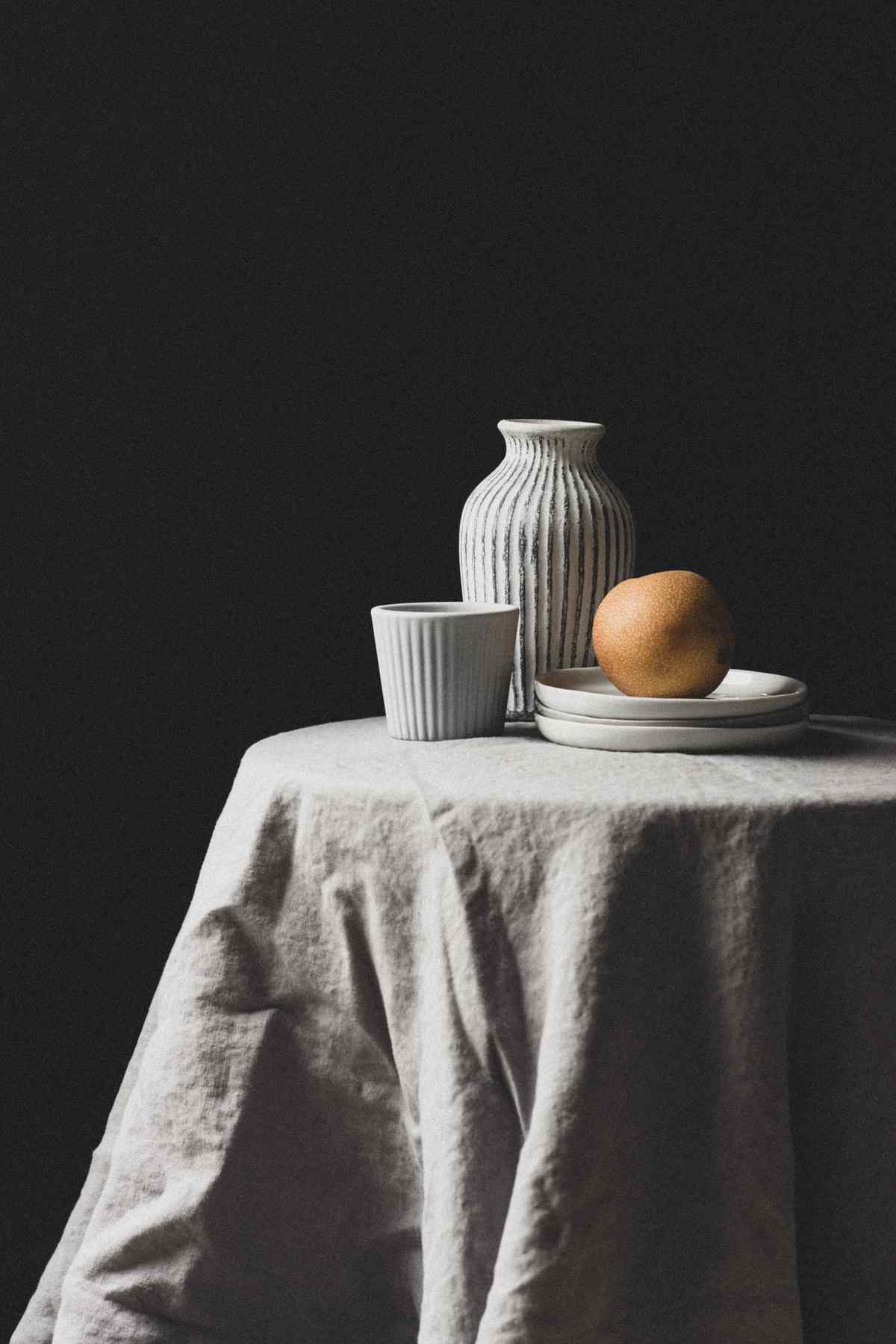
Modern treatments strip the table down. A single vase of stems against a plain ground, three pears in a row, a cup and a shadow — the modern still life trades abundance for clarity and shadow for light. Its backgrounds are pale, its palettes restrained, its mood closer to a held breath than a feast. This is the version that thrives in bright kitchens, spare dining spaces, and Scandinavian-leaning rooms where a dark classical piece would land like a thundercloud.
Photography has joined the genre, too: styled food and object photography uses the same discipline — chosen objects, arranged light — with a camera’s literal eye. A photographic still life suits contemporary rooms that find painted ones too historical. Whichever medium, judge a modern still life by its editing: the genre at this end lives on what the artist left out.
Choosing the arrangement itself
Within the genre, subject families carry distinct moods. Flowers are the most forgiving entry — peonies, tulips, and arranged stems bring color in a contained shape and suit almost any room that hosts people. Fruit and food pieces lean appetite and welcome; they are the kitchen and dining room’s home team, and in classical treatments they carry the abundance theme most fully. The appetite side of the genre is the whole subject of food and drink wall art, where it is treated on its own terms. Vessels and objects — pottery, glass, books, instruments — are the quietest family, chosen less for color than for form, and they pair well with rooms built from similar objects, echoing shelves and tabletops into the picture. Game and larder pieces from the classical tradition are powerful but specific: their hunting-lodge honesty needs a room that means it.
Grouping still lifes works differently from grouping scenes. Two small arrangements hung as a pair — matched in palette and frame, differing in contents — read as courses of the same meal, and the conversation between them is the pleasure. A single larger arrangement makes the stronger solitary statement. What rarely works is a crowd of small, unrelated still lifes: the genre’s calm depends on each arrangement being granted its own field of quiet, and crowding steals exactly that.
Still life wall art for the rooms where people eat
Still life’s natural home is the dining room, and the fit is more than thematic. Diners view wall art seated, at close range, for long stretches — conditions that punish art relying on scale or spectacle and reward art built on detail and balance. A still life is composed to be looked at exactly that way, across a meal, in lamplight, between courses. Hung at seated eye level rather than standing height, it meets its audience where they actually are. The dining room’s own guide — dining room wall art, setting the table’s backdrop — takes the room’s side of the same arrangement.
Kitchens claim the genre’s lighter half: ingredient studies, single fruits, herbs, and vessels, hung where cooking happens. A small still life near a breakfast nook or above a work counter brings the room’s own materials — produce, pottery, linen — into its decoration, which is why the subject never looks pasted onto a kitchen the way an unrelated scene can. Keep kitchen pieces behind the splash zone and out of the steam’s direct path, and the subject will look after the room for years.
Framing and scale for depth
Still life wall art is painted illusion — a flat surface pretending to hold real objects in real space — and framing decides whether the illusion deepens or collapses. A frame with some depth and a mat with breathing room acts like the edge of the table: it gives the arrangement a stage and lets shadows read as shadows. This is the genre where the traditional treatment — gilt or dark wood, a generous mat — earns its keep, because the picture’s whole pleasure is depth conjured from flatness. Modern minimal pieces invert the advice: thin frames, no mat, the object floating in its own air.
Light in the room completes the framing’s work. A still life painted around a single light source looks most itself under settled, directional light — a lamp to one side, daylight from a nearby window — and flattest under bright overhead light that fills every painted shadow with real glare. If the room’s light is fixed and fierce, choose a higher-key modern arrangement whose shadows are shallow to begin with.
Scale generously within the genre’s honesty. A still life printed somewhat larger than life gains presence without lying — the objects become monumental the way a close gaze makes them — and a dining room can absorb one large, quiet arrangement more easily than several small busy ones. Choose one arrangement you would set on your own table, light it kindly, and let it do what it has done for centuries: make an ordinary wall feel composed.
More in Subject Guides


Continue exploring: Subject Guides guides · All guides