

How-To: Sizing, Hanging & Arranging
Art Size Above Sofa: Width and Height Rules
That one wall is judged from the seat, not the doorway. Measure the sofa itself, leave the right gap above its back, and let the total footprint do the work.
Key Takeaways
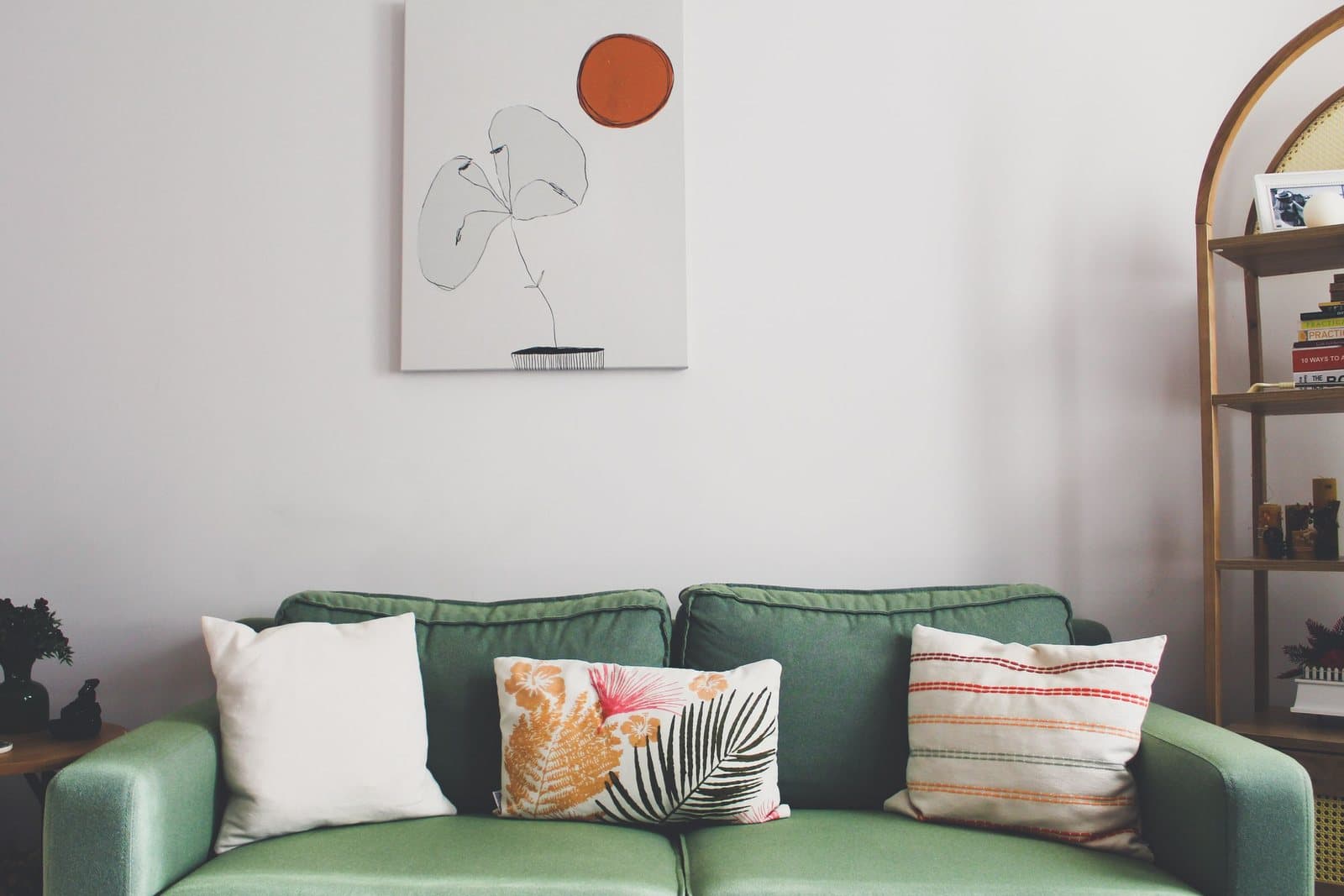
- Art above a sofa should span about two-thirds of the sofa's full width, roughly 60 to 75 percent — about 40 inches over a 60-inch loveseat, 48 inches over a 72-inch sofa, and 56 inches over an 84-inch sofa.
- Hang the bottom edge 6 to 10 inches above the top of the sofa's back; use the 8-to-10-inch end on deep, reclined sofas so leaning heads clear the frame.
- Never make the art wider than the sofa, and center it on the sofa — or on the main run of a sectional — not on the wall's midpoint.
- Pairs and trios obey the same total: over a 90-inch sofa, two 28-inch panels with one 3-inch gap, or three 18-inch panels with two 2.5-inch gaps, each total 59 inches.
- Tape the candidate footprint at the computed height and judge it seated before ordering; a 24-inch piece over an 84-inch sofa is only 29 percent of its width, less than half the target.
The wall above the sofa is the most-viewed wall in most homes and the one people most often get wrong — usually in the same direction: a piece a size too small, floated a few inches too high, apologizing to the room. This guide takes that one wall apart, starting with art size above sofa: how wide the art should be relative to your specific sofa, how far above the back cushions it should hang, and how the answer changes when the art is a pair or a trio instead of a single piece. It is also the decision at the center of living room wall art as a whole, where subject and style join size and height.
Measure the sofa, not the wall
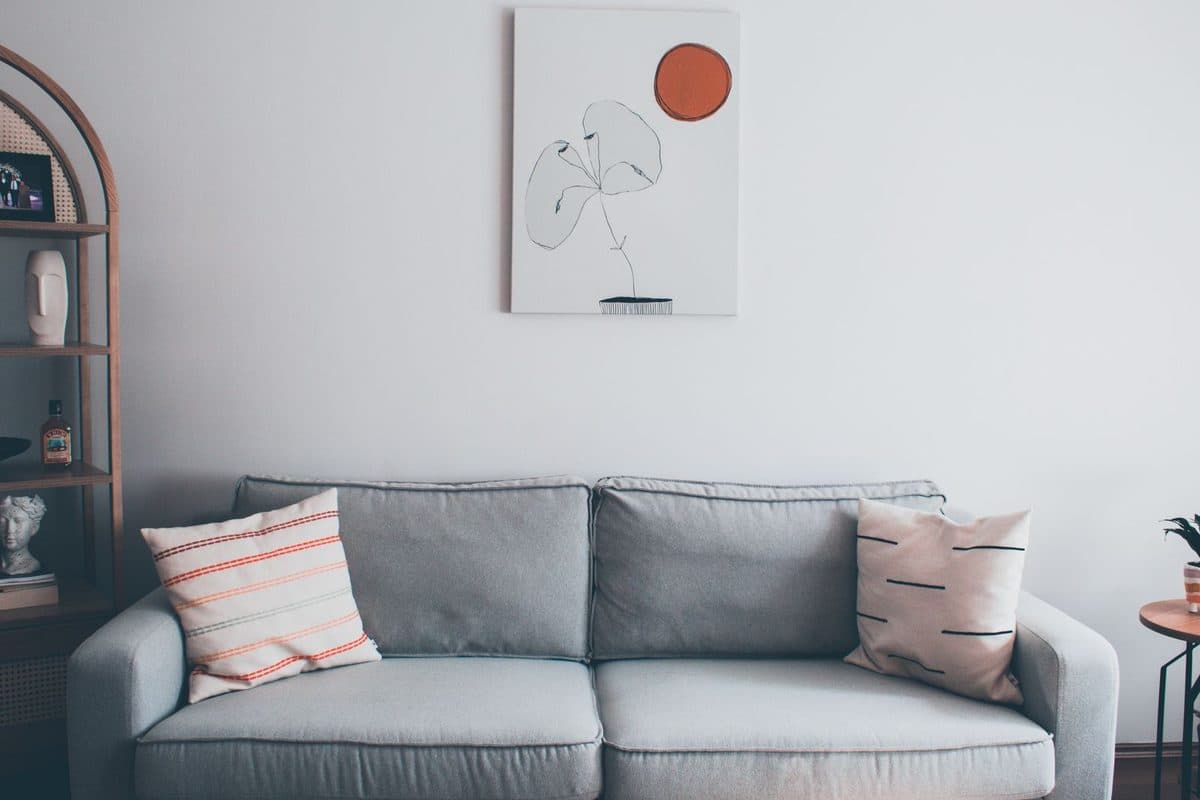
Everything starts with one number: your sofa’s full width, arm to arm, measured at its widest. Not the seat cushions, not the wall behind it — the whole piece of furniture, because the art relates to the furniture. The governing ratio is the one the wall art size guide in this series is built on: the art should span about two-thirds the width of the sofa, with roughly 60 to 75 percent reading as deliberate. Run the two-thirds arithmetic on the sofas people actually own:
- Loveseat, 60 inches: art about 40 inches wide.
- Apartment sofa, 72 inches: art about 48 inches wide.
- Standard sofa, 84 inches: art about 56 inches wide.
- Long sofa, 96 inches: art about 64 inches wide.
Two guardrails around the ratio. The art should never be wider than the sofa itself — wide art over narrower furniture looks like a hat on a child. And at two-thirds, the piece leaves balanced wall on both sides: 56 inches of art over an 84-inch sofa leaves 14 inches of margin on each side, which is exactly the breathing room that makes the arrangement look composed rather than wedged.
Sectionals and off-center sofas
An L-shaped sectional has two widths; the art answers the one it hangs over. Size to the main run — the long seating section whose back is against the wall — and center the art on that run, not on the room and not on the whole L. If the chaise return is the part against the wall, size to the chaise’s length instead. And when a sofa sits off-center on its wall — pushed toward a fireplace, say — the art centers on the sofa, not on the wall’s midpoint. The wall is the background; the sofa is the frame the viewer unconsciously uses. Art centered on the wall over an off-center sofa looks wrong in a way guests feel but cannot name; now you can name it.
Art size above sofa: the height gap above the back cushions
Height above a sofa is measured from the furniture, not the floor: the bottom edge of the art should hang 6 to 10 inches above the top of the sofa’s back. Sofa backs typically stand 30 to 38 inches tall. Worked example with middle numbers: a back at 35 inches, an 8-inch gap, and a 30-inch-tall piece. The bottom edge sits at 43 inches, the top at 73, and the center lands at 58 inches — squarely in the eye-level band, which is a pleasant confirmation that the two rules were designed to meet. Viewers of sofa art are seated, so a center a few inches below the standing band is no failure; the furniture rule wins ties. The general case — bare walls, stairs, and hallways — is covered by the eye-level hanging rule.
The failure modes at the extremes are worth knowing. Too high — bottom edge 14 or 16 inches above the back — and the art visibly floats away, severed from the sofa, drifting toward the ceiling. Too low and two things go wrong: heads lean back into the frame, and the art disappears behind whoever sits down. Deep, reclined sofas argue for the top of the gap range, 8 to 10 inches, because leaned-back heads reach higher than upright ones. If a console table stands behind the sofa, measure the gap from the sofa’s back anyway — the art still belongs to the sofa; the table is scenery behind it.
One piece, a pair, or a trio
The ratio governs the total footprint either way — pieces plus the gaps between them. Take a 90-inch sofa: two-thirds is 60 inches, and the comfortable band runs about 54 to 67 inches. Three ways to fill it:
- A single piece about 60 inches wide — the calmest answer, and the one that suits a strong, wide image; horizontal formats earn their keep here.
- A pair: two 28-inch-wide panels with one 3-inch gap total 59 inches — in band, with a vertical seam of wall that gives the pair its rhythm.
- A trio: three 18-inch panels with two 2.5-inch gaps also total 59 inches (54 + 5), trading one image’s sweep for a measured beat across the wall.
A gallery cluster can fill the same footprint, but hold its outer edges disciplined: the cluster’s bounding box obeys the ratio and the gap, and its bottom edge runs at one level even if the tops step. Whatever the configuration, weigh it against the seated view before anything is hung — the living room is judged from the sofa, not from the doorway alone.
Pairs and trios: keeping one level line
Multi-piece arrangements above a sofa share one bottom edge: the gap is measured to the lowest bottom among the pieces, and equal-size pieces align at top and bottom both. Mixed sizes in a row are the exception — align their bottoms on the gap line and let the tops step; a stepped top over a level bottom reads as rhythm, while a stepped bottom reads as error. Run the center check on the whole row, not each piece: a trio of 24-inch-tall panels with its bottom edge at 43 inches (the 35-inch back, the 8-inch gap) centers at 55 inches as a unit — inside the comfortable seated range, and no individual panel needs its own height opinion. A smaller worked example for a smaller sofa: a 78-inch couch targets 52 inches at two-thirds; a pair of 25-inch panels with a 2.5-inch gap totals 52.5 inches, inside the 47-to-58-inch band — which is why pairs are the loveseat’s and the apartment sofa’s best friend.
The view from the seat
Sofa art is one of the few categories viewed almost entirely by seated people, and seated geometry has its own facts. A seated adult’s eyes sit about 44 to 48 inches above the floor; heads lean back above the sofa’s back line when the cushions invite it. Two consequences. First, a center in the mid-50s is not a compromise but the correct target — art centered at 60 inches over a deep sofa is hung for a person who will never stand there. Second, the bottom edge matters as clearance, not just composition: on deep, reclined sofas, choose the 8-to-10-inch end of the gap range so the frame never becomes a headrest with a picture attached. Check the final position from the seat itself, remote in hand, before the hooks go in. If the piece reads slightly high from there, it is high — the standing view from the doorway is the guest’s three seconds; the seated view is your three hours.
Art size above sofa: the tape test and the classic mistake
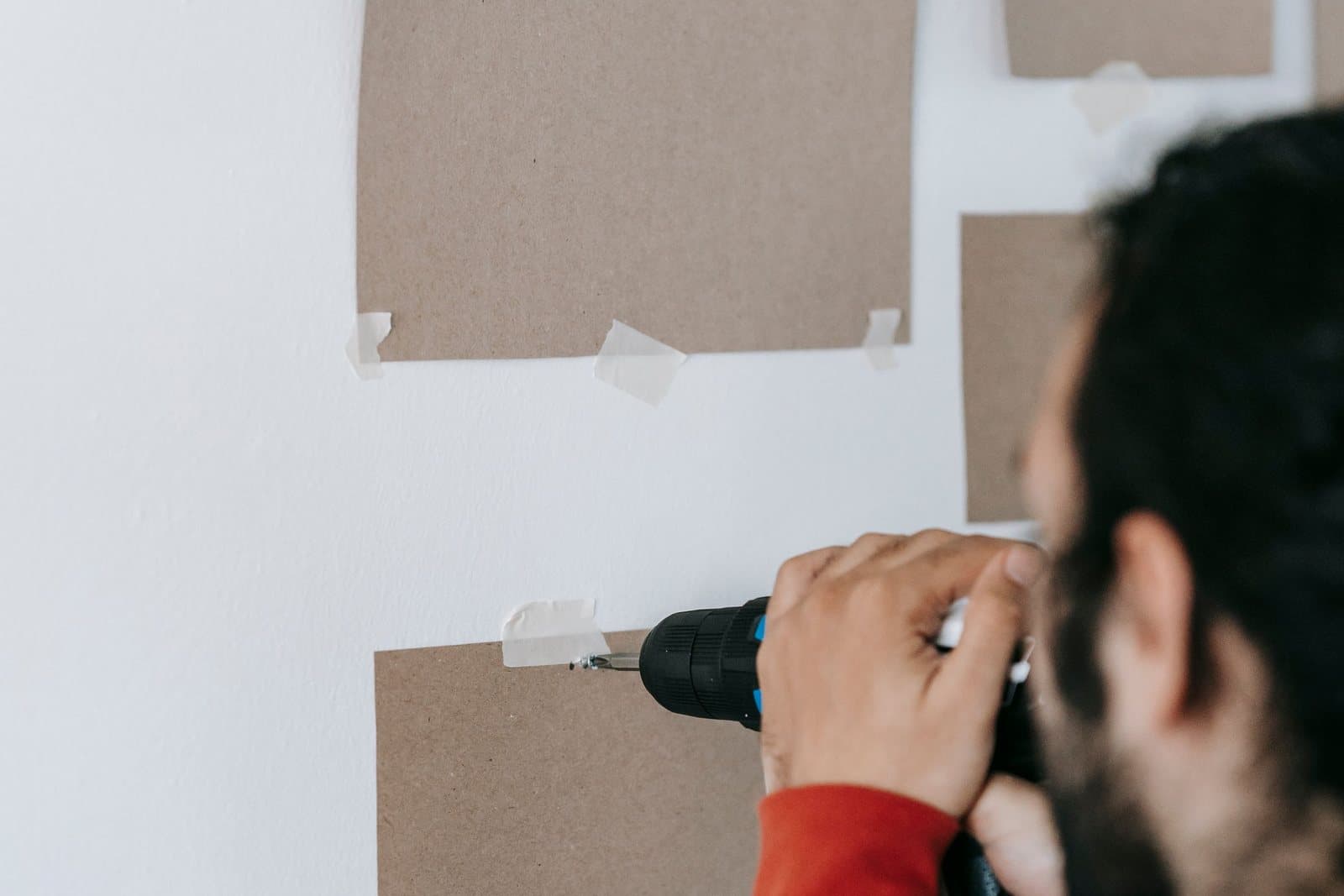
Before ordering, outline the candidate footprint in painter’s tape at the computed height, sofa in place, and sit down. Then do the arithmetic of the classic mistake so you can recognize it in the tape: the most common first purchase is a piece around 24 to 30 inches wide. Over an 84-inch sofa, 24 inches is 29 percent of the width — less than half the two-thirds target of 56 — and no arrangement of cushions or throws will negotiate that gap. It reads, at every glance, as a picture visiting a wall rather than furnishing it. Buyers who tape first almost never buy it; the tape rectangle at 56 inches wide looks startling for a day and inevitable by the second.
One last check on art size above sofa when buying online: judge candidates by finished footprint. A canvas print’s listed size is its finished face, while a framed paper print finishes several inches larger than its image size once mat and frame are counted. Compare both against your 60-to-75-percent band as they will actually hang, and the sofa wall — the wall you will look at most — becomes the easiest wall in the house to get right.
More in How-To: Sizing, Hanging & Arranging

Continue exploring: How-To: Sizing, Hanging & Arranging guides · All guides