

How to Clean Canvas Prints Without Damage
Most cleaning takes two minutes and no products at all. The risk is not dust - it is the familiar sprays and cloths that can mark a surface in seconds.
Key Takeaways
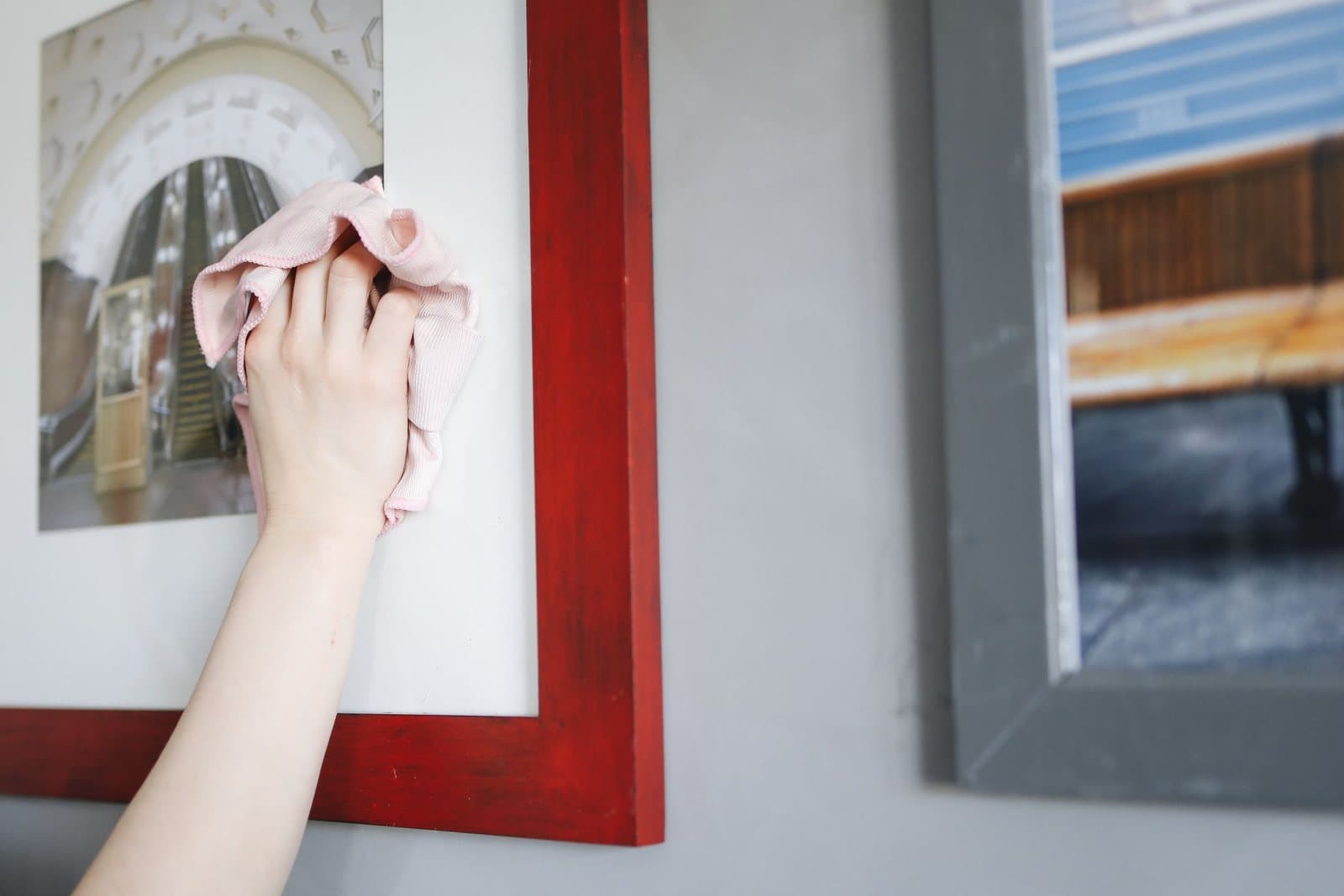
- Start dry: Ninety percent of canvas cleaning is dry dusting with a soft, natural-bristle brush, a clean microfiber cloth, or a feather duster, working from the top down with a light hand.
- For anything more than a feather-duster pass, take the print down and lay it face up on a clean, flat surface, because pressing on a hanging canvas can leave a permanent dent from the stretcher bar behind it.
- If dry dusting is not enough, use plain water on a microfiber cloth wrung out until it is barely damp, wipe gently in one direction, dry immediately with a second cloth, and test first on a bottom corner of the wrapped edge if you are unsure whether the print is coated.
- Never use household cleaners on canvas: glass cleaner and all-purpose sprays, abrasive pads and paper towels, furniture polish, steam, and even gentle detergents can soften coatings, streak the finish, lift color, or leave residues in the weave.
- For a spot, start dry with a soft white eraser used with almost no pressure, then dab rather than rub with the barely-damp cloth, and never pick at dried splashes with a fingernail or knife.
Canvas prints ask very little of you — no glass to polish, no frame shop visits — but dust is patient, and sooner or later every print needs a clean. The good news is that the right method is the gentle one, and it takes two minutes. The bad news is that the wrong products can damage a surface permanently in seconds. This guide to how to clean canvas prints separates the two: what to do routinely, what to do about marks, and what to keep in the cupboard under the sink, far away from your art.
How to clean canvas prints: start dry
Ninety percent of canvas cleaning is dry dusting. Use a soft, natural-bristle brush, a clean microfiber cloth, or a feather duster, and work with a light hand — you are lifting dust off a surface, not scrubbing a countertop. Brush from the top down so loosened dust falls away from the cleaned area, and do not forget the top edge of the frame, where dust settles thickest. A vacuum’s soft brush attachment, held just at the surface without dragging, handles a neglected piece well. How often depends on the room: most homes need nothing more than a dusting every month or two, kitchens and rooms with a fireplace more often, because airborne grease and soot make dust sticky rather than loose.
Technique: how to hold, reach, and support
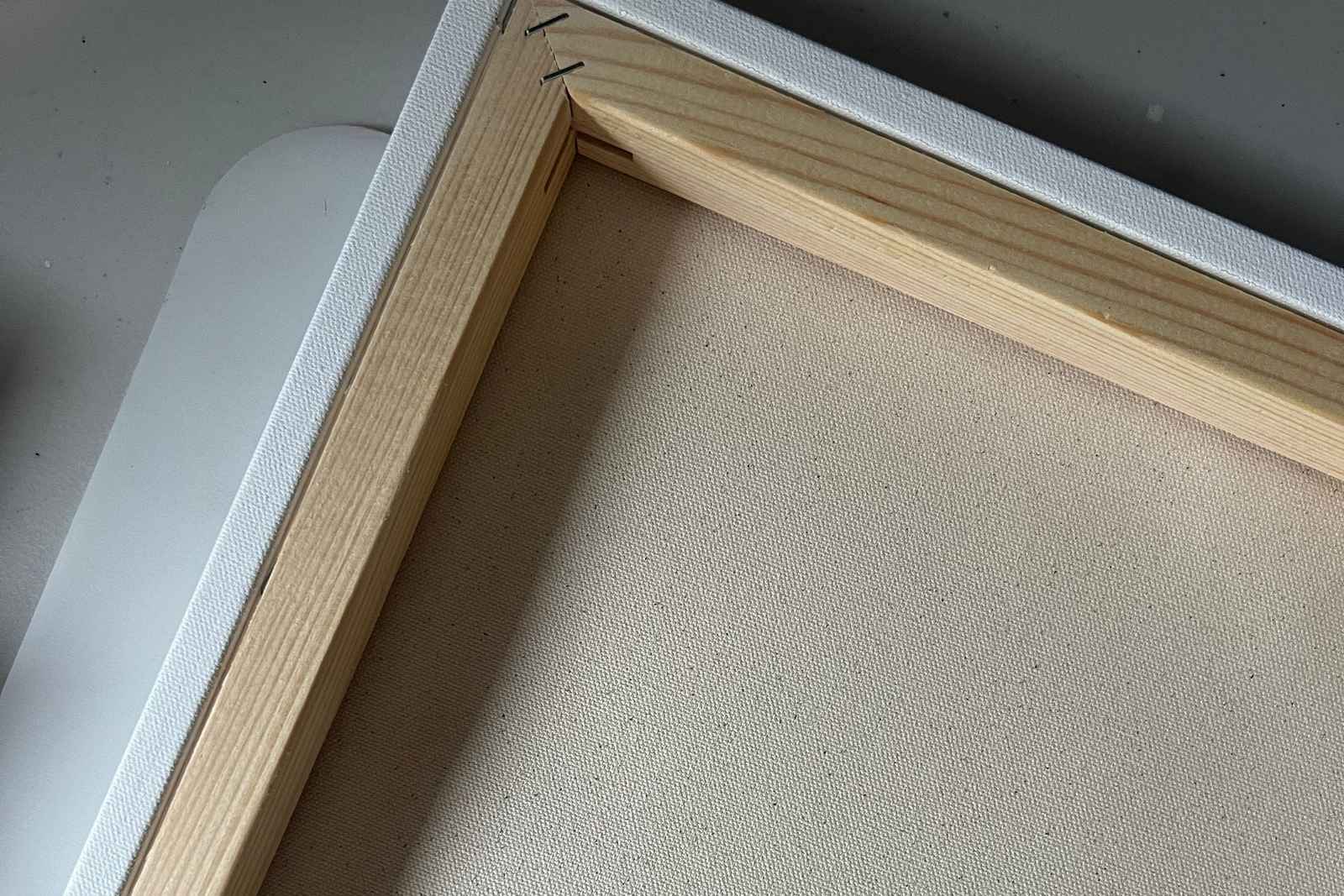
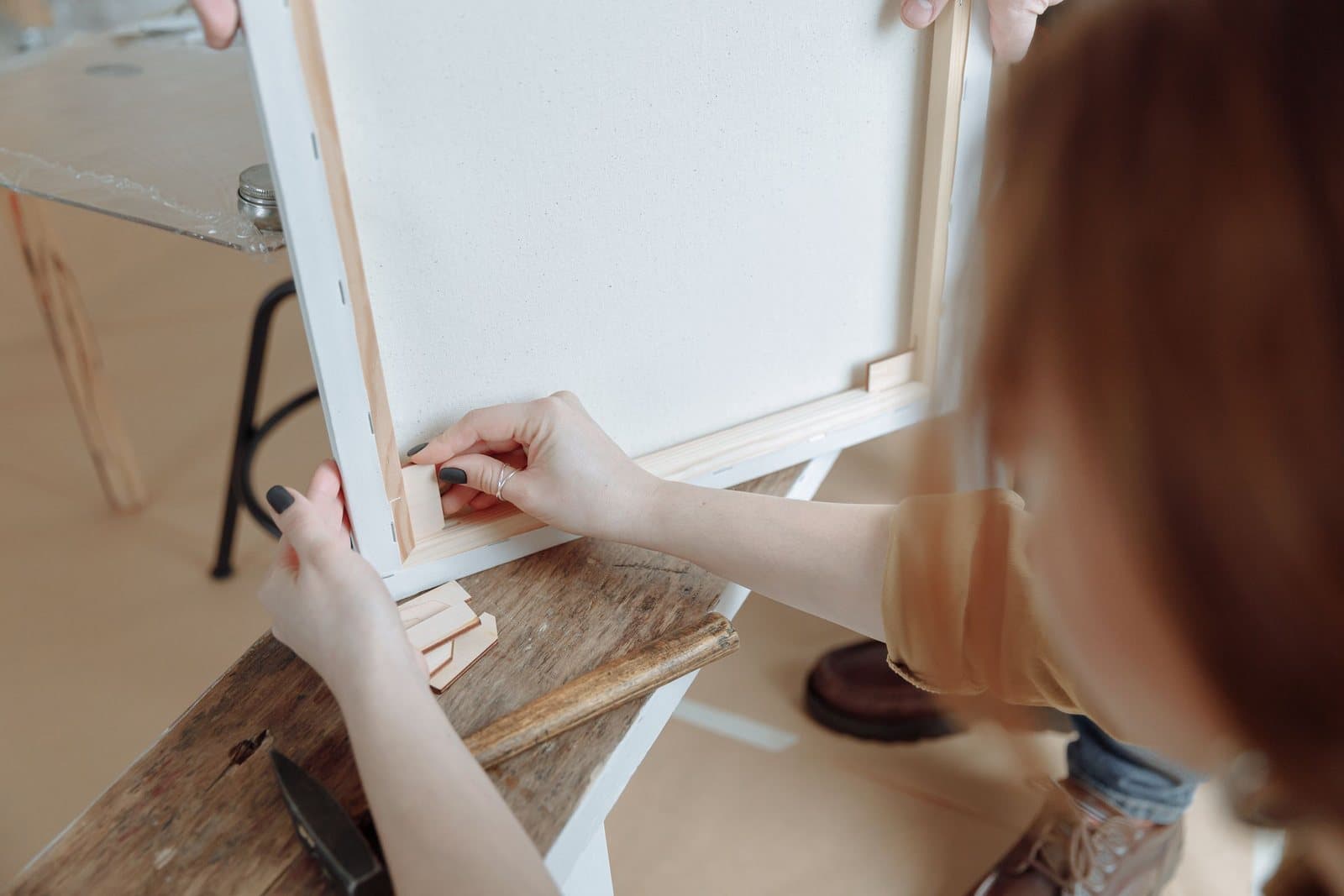
A few handling habits make cleaning safer whatever tool you use. For anything more than a feather-duster pass, take the print down and lay it face up on a clean, flat surface — cleaning a hanging piece means pressing against a surface that can flex, and pressing on stretched canvas is how a print picks up a permanent dent from the stretcher bar behind it. Work in good light, ideally the raking light from a window or lamp at a low angle, which shows dust and smears that flat overhead light hides. Support large pieces from beneath with a pillow or folded blanket under the area you are wiping, and never carry a canvas by its top bar alone with the fabric flexing — two hands, at the sides, keeps the tension where it belongs. These sound like fussy details until you have seen the alternative: most cleaning damage is not chemical at all, it is mechanical.
The damp-cloth question
When dry dusting is not enough — a kitchen print wearing a film of cooking haze, say — a slightly damp cloth is the next step, with conditions. Use plain water, distilled if your tap water is very hard, on a microfiber cloth wrung out until it is barely damp. Wipe gently, in one direction, and dry the surface immediately with a second cloth. The critical word is slightly: a wet cloth can drive moisture into the canvas weave, swell the fibers, and leave tide marks or, on an uncoated print, disturb the ink itself. If your print is coated — most canvas prints are — it will tolerate careful damp wiping well, and a stated coating is near the top of what to look for in a quality canvas print. If you are unsure whether a print is coated, test your method on a bottom corner of the wrapped edge, where any surprise will live out of sight.
How to clean canvas prints: what never to use
Keep every household cleaner away from canvas. Glass cleaner and all-purpose sprays carry solvents and ammonia that can soften coatings, streak the finish, and lift color — and the damage often appears as a permanent cloudy patch exactly where you wiped. Abrasive pads and paper towels scratch and can burnish the weave shiny. Furniture polish leaves a waxy film that grabs dust faster than before. Steam is its own hazard: it forces moisture deep into the fabric and the wooden frame behind it. Even “gentle” detergents are a risk not worth taking, because residues stay in the weave. If plain water does not shift a mark, the answer is not a stronger chemical — it is lower expectations, or professional help for a piece that matters.
Kitchens, bathrooms, and smoky rooms
Some rooms dirty prints faster than others, and the cleaning response changes accordingly. In a kitchen, airborne grease puts a film over everything; the film is best kept from accumulating at all, with more frequent dusting and, when needed, the slightly-damp wipe — the longer grease sits, the more stubbornly it bonds. In a bathroom, the issue is humidity plus toothpaste mist and hairspray: a print here needs occasional wiping and, more importantly, a dry cloth run over it after steamy showers to stop moisture from sitting on the coating. In rooms where smoking happens, everything yellows; the film on a coated canvas can be lifted by the damp method with patience, but an uncoated surface may simply be stained into its ink layer, and no cleaning returns it. Prevention is the honest half of this section: the best place for a beloved piece is rarely the most humid corner of the house; the same placement logic governs light, too — whether canvas prints fade depends mostly on the wall you choose.
Spots, smudges, and accidents
For a specific spot — a fingerprint, a splash — work locally and patiently. Start dry: a soft white eraser, used with almost no pressure, lifts some surface marks. Failing that, the barely-damp cloth, dabbing rather than rubbing, since rubbing spreads the mark and works it into the texture. Never pick at dried splashes with a fingernail or knife; soften first with the damp cloth, then dab. Cobwebs yield to the brush. And if a piece suffers something serious — a soaking, mold spotting, a tear — stop cleaning entirely: wet canvas should dry flat and undisturbed away from heat, and repairs of that order belong to a framer or conservator, whose hourly rate is cheaper than a ruined print.
The back of the piece and the wall behind it
Cleaning day is also inspection day, and the back of the print deserves thirty seconds of it. Dust gathers behind hanging art in surprising quantity — run the brush or a dry cloth over the backing and the frame’s edges before rehanging, and wipe the wall patch it covers, which is usually the dirtiest rectangle in the room. Check the hanging wire or bracket for fraying and the wall hook for looseness while the piece is in your hands; more art is damaged by falling than by any cleaning mistake. If the back shows spotted paper backing or a musty smell, that is moisture talking, and the piece wants a drier wall more than it wants a cleaner front — and if it is headed off the wall for a while, how to store wall art covers the wrapping, padding, and room it should wait in.
Framed prints and glass
A framed print behind glass inverts the rules: now the glass is the surface, and it can be cleaned like glass — almost. Spray cleaner onto the cloth, never onto the frame, so liquid cannot run down and wick under the glass edge onto the art. Wood frames want only a dusting and an occasional barely-damp wipe; soaking a frame’s finish or its joints does quiet damage. Acrylic glazing is the exception that matters, and it has its own rules — covered below.
Metal and acrylic prints
Other formats clean differently, and the differences are worth knowing. Metal prints are the hardiest: a microfiber cloth, dry or slightly damp, takes off fingerprints and dust, and the surface shrugs off what would harm canvas — though abrasives will still scratch it. Acrylic prints are the delicate ones. Acrylic scratches easily and it hates ammonia: the ammonia-based glass cleaners many people reach for can craze and cloud acrylic permanently. Use a clean microfiber cloth — grit caught in a dirty cloth is the usual scratch culprit — with plain water or a cleaner made specifically for acrylic, and never paper towels. Across every format, the theme of how to clean canvas prints holds: the softest tool that works is the right one, and it is almost always just a dry cloth and a minute of patience.
More in Care & Print-Craft Quality
Continue exploring: Care & Print-Craft Quality guides · All guides