

How to Store Wall Art: Moving and Wrapping
Damage rarely happens on the wall. It happens in a damp corner, under a stack, or inside wrapping that traps moisture - all avoidable with a few habits.
Key Takeaways
- Choose the room first: store art somewhere cool, dry, and stable like an interior closet or spare room, never directly on a concrete floor, and avoid attics that bake and freeze, garages that swing with the weather, and basements that carry damp.
- Protect the face with a sheet of acid-free tissue, glassine, or plain clean cotton fabric, pad the corners with protectors taped to themselves - never taped to the art - and add cardboard or foam board front and back.
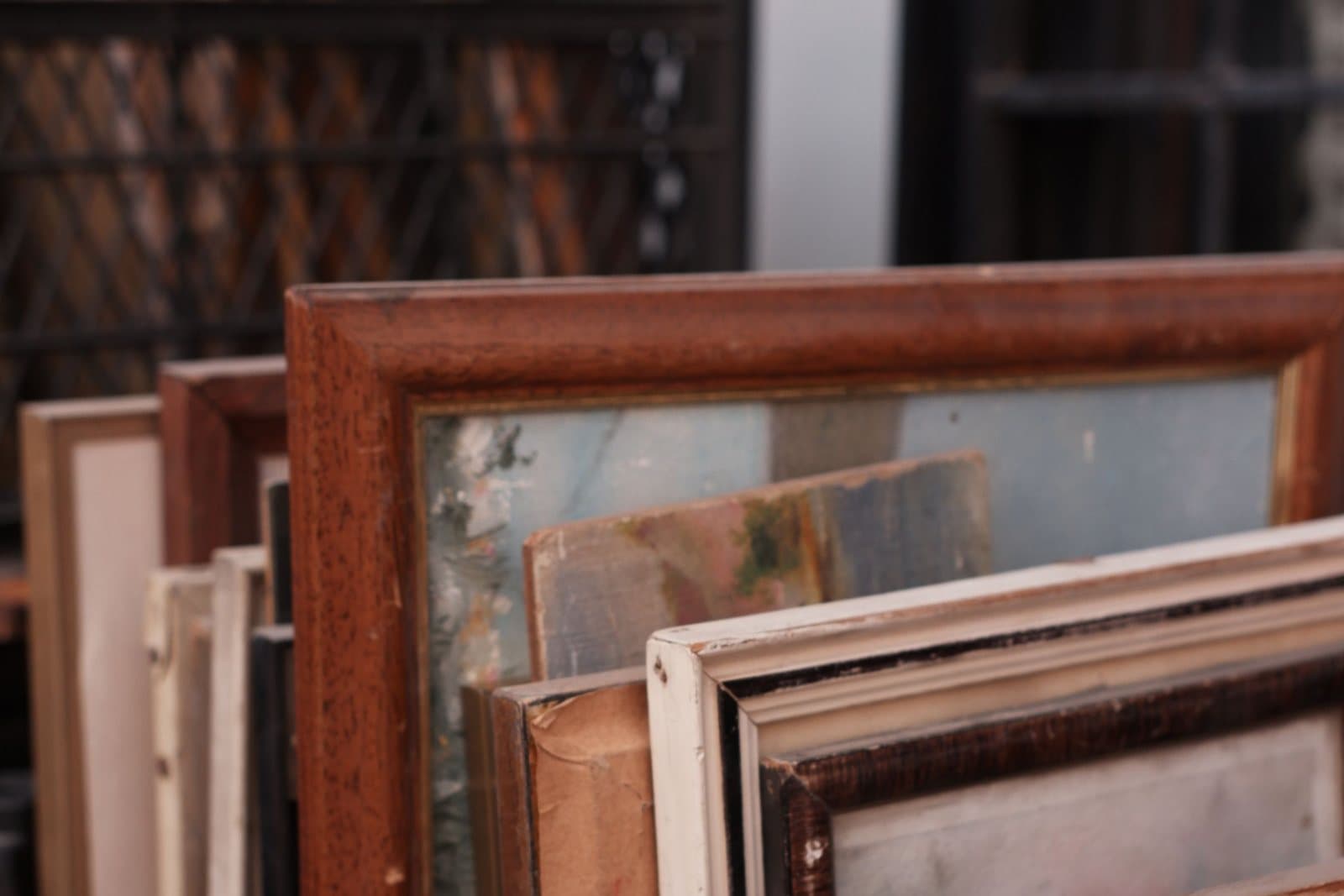
- Store pieces upright on their edges with a rigid separator between them, never face-to-face or back-to-back bare, and keep the lean gentle and close to vertical so a frame does not bow over time.
- Never put bubble wrap directly against a painted, canvas, or acrylic surface for months, and never seal art airtight in plastic, because a piece that cannot breathe will trap moisture and bubble wrap can imprint a pattern into soft finishes.
- Label the wrapping, not the art, with what the piece is, which room it belongs to, and a note of its condition, photograph each piece before a move, and check stored art every few months for a musty smell or a spreading stain.
Wall art spends more of its life off walls than most of us plan for: between homes, during renovations, while a room waits for paint or a season’s rotation sits out its months. Storage is where good pieces quietly get damaged — rarely by drama, almost always by a damp corner, a lean that lasted a year, or wrapping that did harm while trying to help. The rules below for how to store wall art are the ones framers and movers actually use, and none of them requires special equipment.
Choose the room before you wrap anything
The storage space matters more than the wrapping. Art wants what a spare bedroom offers and a garage does not: cool, dry, and stable. Attics bake and freeze; garages swing with the weather; basements carry the damp that feeds mold and swells wooden frames. Humidity cycling is the enemy twice over — it works canvas loose and tight by turns, and it creeps into paper and backing boards. An interior closet, a spare room, or a climate-controlled storage unit beats a larger space with wild swings, and art should never sit directly on a concrete floor, where cold and moisture wick upward: a pallet, a shelf, or even a pair of wood battens underneath is enough.
How to store wall art: wrap the face, pad the corners
Handle pieces with clean, dry hands — or cotton gloves for anything unglazed and glossy — and give the face a soft barrier before anything structural goes on. A sheet of acid-free tissue, glassine, or plain clean cotton fabric against the surface prevents scuffs and stops wrapping materials from touching the image. Then protect the corners, because corners are what storage actually breaks: cardboard corner protectors, or folded triangles of stiff card taped to themselves — never taped to the art — take the knocks. A final layer of cardboard or foam board front and back, secured around the whole package, turns a fragile object into a handleable one. Two cautions matter. Bubble wrap should never sit directly against a painted, canvas, or acrylic surface: left for months, its bubbles can imprint a pattern into soft finishes. And never seal art airtight in plastic — a wrapped piece that cannot breathe will trap whatever moisture was in the room that day, which is an invitation to mold.
How to store wall art upright, separated, never leaning hard
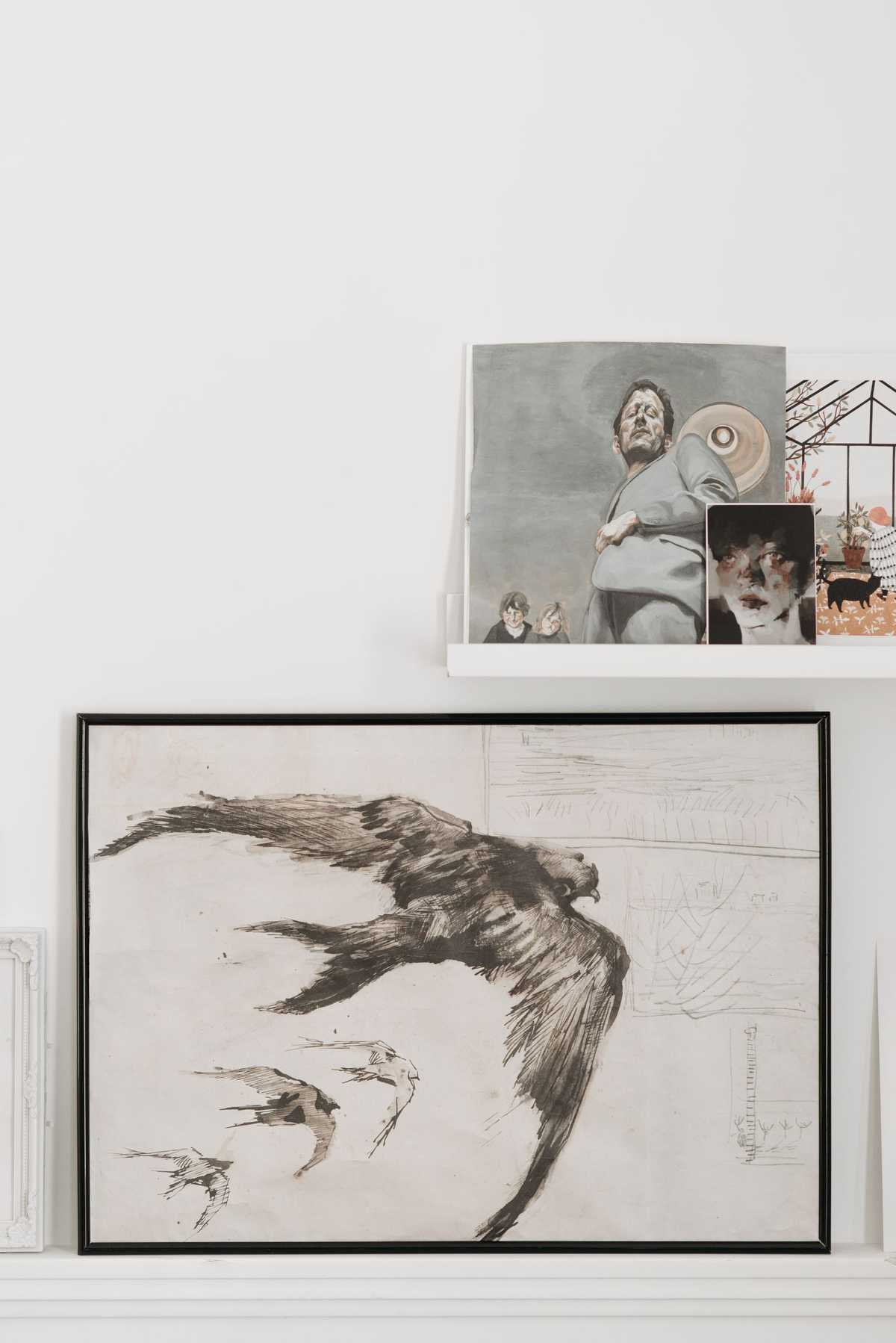
Store pieces upright, on their edges, the way books sit on a shelf — flat stacking invites the weight of the pile onto the lowest piece’s surface, and a canvas stacked flat can take a permanent impression of whatever pressed into it. Between pieces, keep a rigid separator: the cardboard sandwich from the wrapping step, or a sheet of foam board, so no frame’s hardware ever touches another piece’s face. Never store two pieces face-to-face or back-to-back bare. Keep the lean gentle — close to vertical is best; a piece left leaning at a hard angle for a year can bow its frame — warped and sagging canvas is the diagnosis guide for when it does — and a row that leans too far is one nudge from a domino fall. Like sizes together makes the row stable; the largest and heaviest pieces go where nothing can topple onto them.
Unframed prints, rolled canvas, and paper
Not everything in storage is stretched and framed, and the unframed pieces follow different rules. A loose print on paper stores best flat — in a portfolio, a flat file, or simply between two sheets of stiff board larger than the print, with acid-free tissue against its face, kept horizontal and unweighted. Rolling is the second-best option and should stay second: if a print must roll, roll it around the outside of a wide tube — never tightly around a narrow one — with the image facing outward for glossy and resin-coated papers, tissue interleaved, and the tube stored horizontally where nothing can crush it. A rolled canvas that was once stretched deserves extra suspicion: rolling can crack a coated surface along the roll lines, so flat beats rolled for canvas whenever space allows. Whatever the format, never fold anything. A crease in paper or canvas is forever in a way a curl is not — curls relax under gentle weight when the piece comes back out; creases are a conservator’s invoice.
Label like you will forget (you will)
Write on the wrapping, not the art: what the piece is, which room it belongs to, and — genuinely useful later — a note of its condition and any quirk, like a corner that was already soft. Photograph each piece before wrapping if a move is involved; the photos are your evidence if a mover dispute ever needs them, and your memory when the boxes reopen. Keep an eye on stored art if the stay runs long: a check every few months catches the small problems — a musty smell starting, a water stain spreading on a ceiling — while they are still small. Storage is not supposed to be a sealed tomb; pieces that come out once a season for an airing and an inspection fare best — it is the same rhythm the seasonal rotation habit builds a whole system around.
Short stays versus long stays
The length of the stay calibrates the effort. For a few weeks during a repaint, a piece needs only a safe room, an upright stance, and a soft sheet over it against dust and paint spots — the full wrapping ritual would be wasted effort. For a season or a year, do the ritual properly: wrapped, padded, separated, labeled, and inspected now and then, because the slow enemies — damp, a developing lean, a spill nobody noticed — all work on a timescale of months. For the genuinely indefinite, the open-ended “someday room,” be honest about the odds: storage that lasts years defeats good intentions, and a piece you value is safer lent to a friend’s wall than entombed in a closet. Art in storage should have a date with a wall, even a provisional one.
Moving day rules
For a move, the same principles tighten. Transport pieces upright and wedged so they cannot slide or tip, never flat under other cargo. Keep them out of a parked vehicle’s heat — a car interior in summer sun reaches temperatures that soften adhesives and finishes quickly. Load art last and unload it first where you can, and if a piece must wait in the new home, it waits upright in an interior room, not in the garage “for now,” because for-now storage is how a season happens to a print. When art comes out of any long storage, let it acclimate in its wrapping for a day before unwrapping if it has traveled between climates; condensation forms on the cold object, not the warm one, and patience keeps it off the surface.
None of this — the whole of how to store wall art — is fussy for its own sake. A stored print has exactly three enemies — moisture, pressure, and impact — and every rule above addresses one of them directly. Store art the way you would want it stored for you, and the piece that comes back out of the closet is the piece that went in, provided it was a quality print by the field guide’s measures to begin with. The ordering questions are answered plainly on our FAQ page, and the about page and shop explain the store these guides are written for.
More in Care & Print-Craft Quality

Continue exploring: Care & Print-Craft Quality guides · All guides