

Color & Decorating Fundamentals
Mixing Art Styles in One Room, Calmly
Art accumulates from grandparents, trips, and your own camera, not from a matched set. That mixture is not something to apologize for - it is what makes a wall personal.
Key Takeaways
- Hold one variable constant and the rest can vary almost freely: a shared color, a shared frame, or a shared era or subject is the minimum thread, and two threads make a room feel curated rather than lucky.
- A shared color does not need to dominate each piece: a repeated hue or a similar balance of light and dark, found by squinting at candidates side by side, is enough for the eye to read unlike pieces as a family.
- A shared frame finish or consistent wide white mats can marry pieces that have nothing else in common, which makes the frame thread the strongest choice when the collection is inherited, already owned, or otherwise non-negotiable.
- Weave styles around the room instead of segregating them by wall, give the arrangement one anchor piece where the room's sightlines land, and keep the spacing discipline identical for everything.
- If the mix feels chaotic, tighten the cheapest variable first - usually frames or mats - rather than replacing art; if it feels tense, demote one of two pieces of similar size and intensity placed as rivals to a quieter spot.
Almost nobody’s art arrives as a matched set. It accumulates: a vintage landscape from a grandparent, a modern print bought on a trip, a photograph you took yourself, something abstract you simply liked. The instinct is to apologize for the mixture, as if the room would look better if everything matched. Usually it would look worse — flatter and less like a life. Mixed rooms fail not because the styles differ but because nothing ties them together. Mixing art styles succeeds or fails on that tie alone. This guide is about the tie: one unifying thread, chosen deliberately, is the whole difference between eclectic and accidental.
Mixing art styles: the one-thread rule
Hold one variable constant across a room’s art and the rest can vary almost freely. The reliable threads are three: a shared color, a shared frame, or a shared era or subject. One thread is the minimum; two make a room feel curated rather than lucky. This is a rule of thumb, not a law of physics — rooms exist that break it beautifully, usually built by people who could articulate exactly which rule they were breaking. For the rest of us, choosing the thread first converts a vague anxiety about “whether things go” into a single concrete decision.
Thread one: a shared color
The most forgiving thread is a repeated hue or value that turns up, somewhere, in every piece on the wall — the shared-color version of choosing art colors for a room by matching, echoing, or contrasting what is already there. It does not need to dominate each image; a thread of deep green can run through a landscape’s shadows, an abstract’s largest shape, and a photograph’s dark doorway, and the eye — which is excellent at exactly this — will read the three as a family. Value works as well as hue: pieces that share a similar balance of light and dark sit calmly together even when their palettes differ. When you are shopping or raiding the spare room, this is the test to run: squint at the candidates side by side and look for the color that keeps showing up. That is your thread, already half chosen by your own taste.
Thread two: a shared frame
Frames are the uniforms of wall art, and a shared frame finish will marry pieces that have nothing else in common. A gilt-framed traditional landscape and a gilt-framed modern print read as cousins; the same two pictures in four unrelated frames read as an accident, not a collection. Matching mats do similar work at lower cost: a consistent wide white mat equalizes a dark etching and a pale watercolor, giving both the same amount of breathing room and the same bright value at their edges. The frame thread is the strongest choice when the collection is fixed — inherited, already owned, non-negotiable — because it changes nothing about the art itself, only about how the art presents.
Thread three: era or subject kinship
Sometimes the thread is a story instead. Pieces from one era — all mid-century, all nineteenth-century — share a visual accent even across subjects, and pieces on one subject share a thread across eras: a vintage travel poster, a modern photograph, and an abstract that merely suggests the same coastline make a small exhibition of an idea. Subject kinship is the easiest thread to extend later, because every future purchase has a clear test to pass. It is also the thread most likely to emerge on its own: people who love a place or an animal keep buying it, and the collection coheres before they notice.
The classic pairings
Two combinations cover most real rooms, out of the wider wall art styles — modern, vintage, bohemian, minimalist, and more — that a room might draw on. Vintage with modern is the workhorse: a detailed, historical piece gains freshness from a clean modern neighbor, and the modern piece gains gravity from the pairing — the usual knot is scale, since vintage pieces often run small and dark, so give the older piece the better light and let the modern one take the larger, simpler wall. Abstract with traditional works on the same exchange in reverse: a traditional room supplies the structure, and an abstract supplies the weather. And within the vintage family itself, eras mix more freely than people expect — a 1920s poster and a Victorian print share paper, patience, and a pre-digital palette that reads as one accent. If a pairing looks wrong, it is almost never the styles; it is a missing thread or two pieces competing at the same size and saturation for the same job.
Arranging the mix
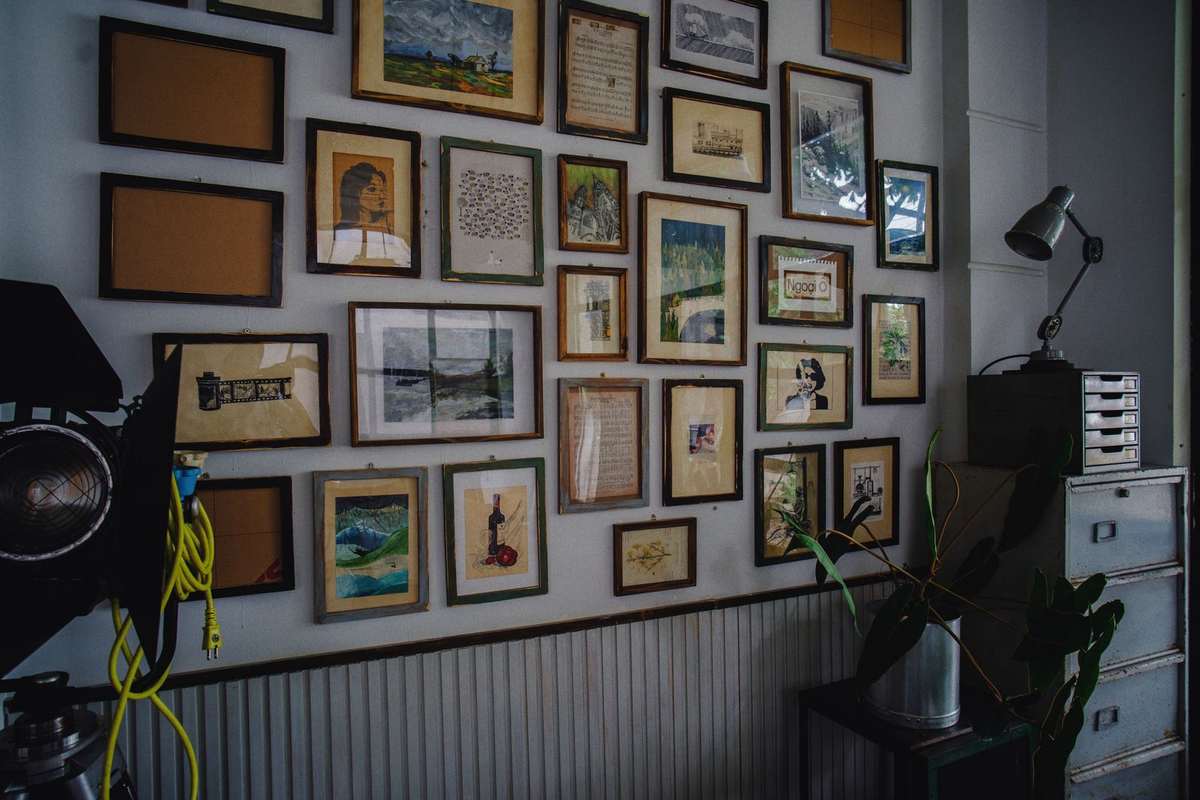
Distribution matters as much as selection. The common error is segregation: all the vintage on one wall, all the modern on another, until the room reads as two rooms arguing. Weave them instead, especially in the living room, where the collection is largest — alternate eras and types around the space so the thread has to work, and be seen working. Give the arrangement one anchor: the largest or strongest piece, placed where the room’s sightlines land, with quieter pieces in supporting positions — the mixed room’s hybrid answer to the statement piece vs gallery wall question, where one anchor leads and the rest support. Keep the spacing discipline identical for everything; consistent gaps are a silent fourth thread. And leave a little wall empty. A mix with breathing room reads as confidence; a mix without it reads as storage.
Sightlines and centerlines: the invisible thread
There is a fourth thread, invisible because it is architectural: alignment. Pieces hung on a shared centerline — their middles at one height around the room, in the usual eye-level band — read as related even when everything about them differs, because the room itself is supplying the rhythm. Pieces hung at wandering heights make even a matched set feel unsettled. This is the thread to check first when a mixed room feels vaguely wrong for no reason you can name: the art is often fine and the hanging is the noise. Sightlines work the same way at longer range. The piece you see from the front door, the one framed by the hallway, the one over the sofa you face from the kitchen — these carry the room’s first impression, so give the anchor positions to the pieces that best represent the collection’s range, and let the experiments live where they are discovered slowly.
A worked wall: three eras, one thread each
It helps to watch the threads stack on a single example. Take a wall holding three pieces: a nineteenth-century landscape print, small and detailed; a mid-century travel poster, bold and flat; and a contemporary abstract, mostly one deep green shape. Untreated, they are three centuries having an argument. Now apply the threads in order of cost. Frames first: all three in the same slim black molding, the landscape given a wide mat so its finished size approaches the others — the frame thread is now holding. Color second: the abstract’s green is the appointment color, and it finds answers in the landscape’s shadowed valley and a single cushion below the poster — the color thread is holding. Arrangement last: the poster takes the anchor position at the sightline, landscape and abstract flank it at a shared centerline with even gaps. Nothing was replaced, nothing matches in the showroom sense, and the wall reads as one collector’s mind — which is all “eclectic done well” has ever meant.
Mixing art styles: when it fails
Diagnosis is mercifully simple. If a room’s art feels chaotic, count the threads: pieces that share no color, no frame family, and no kinship of era or subject are three variables loose at once, and the fix is never to replace the art — it is to tighten the cheapest variable, usually frames or mats. If it feels tense rather than chaotic, look for a duel: two pieces of similar size and intensity placed as rivals. Demote one — smaller wall, quieter corner, more space — and the tension resolves. Mixing art styles is not a talent some rooms have; it is one held thread, one anchor, and even spacing. Hold those, and the collection you already own becomes the most personal wall in the house.
More in Color & Decorating Fundamentals

Continue exploring: Color & Decorating Fundamentals guides · All guides