

Types of Wall Art Prints, Explained
The same picture behaves differently on every surface. Start from your room's light, air, and walls, and the right material usually picks itself.
Key Takeaways
- There is no single best format: each of the seven wins in some rooms and loses in others, so match the format to the room, its light, and how you live rather than chasing a winner.
- Think in families: the soft formats — canvas, framed canvas, and paper — forgive, while hard, glossy acrylic and metal gleam, wood is organic, and a peel is not really an object at all.
- Decide in order: matte surfaces suit bright, window-facing walls; steam and splashes rule out paper and bare wood; large acrylic and wood need studs or proper anchors, while canvas and metal are light for their size.
- Paper holds the finest detail but needs a frame and mat — and a mat typically adds 2 to 4 inches a side, so a 16 by 20 inch print can take up roughly 23 by 27 inches of wall.
- Care differs by format: acrylic wants microfiber and water only, never ammonia-based sprays, metal fears mostly edge dents, and canvas fears steam, abrasion at the corners, and slack.
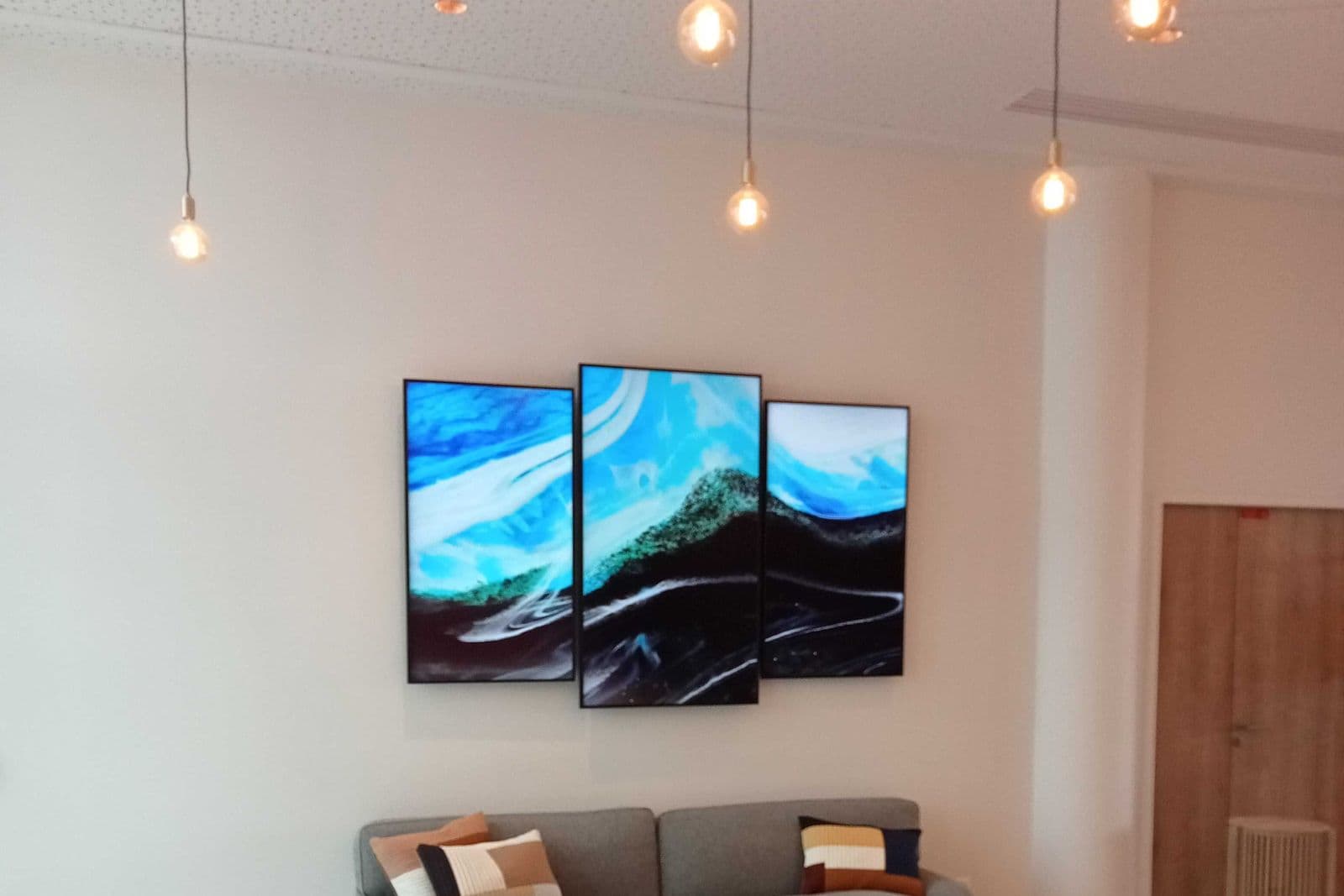
The same image can be printed seven different ways — the seven types of wall art prints covered below — and it will not look — or behave — the same in any of them. Format is the physical form your art takes: what it is printed on, how it is finished, how it meets the wall. Choosing well is not about finding the “best” material; each of the seven formats below wins in some rooms and loses in others. This guide explains each one in plain terms — how it looks, how it feels, what it asks of your walls, and where it lasts longest — so you can match the format to the room instead of guessing. A useful way to hold the seven in mind: three are soft (canvas in two forms, and paper), two are hard and glossy (acrylic, metal), one is organic (wood), and one is not really an object at all (the peel). The soft formats forgive; the hard formats gleam; and each makes its own kind of demand on light, walls, and you.
Canvas: the frameless classic
A canvas print is an image printed on woven canvas fabric and stretched over a wooden frame, with the image wrapping around the edges — the “gallery wrap.” The texture of the weave softens the image slightly, which flatters landscapes, paintings, and anything with a painterly feel. Canvas is matte, so it never fights window light with reflections, and it is remarkably light for its size: a large canvas can hang from a single sturdy picture hook. It asks little of you — an occasional dust, no glass to clean — and it suits living rooms, bedrooms, and anywhere you want art to feel warm rather than polished. Its limits are honest ones: very fine photographic detail softens a little in the weave, and canvas is not the surface for a steamy bathroom or a splash zone.
Two canvas details are worth knowing before you compare pieces; the object itself is taken apart in our guide to what a canvas print is, which follows it from fabric to stretcher frame. The wrap edge comes in flavors: the image can continue around the sides (a full gallery wrap), mirror itself at the edges so nothing is cropped, or stop cleanly at the face with a solid black or white edge. None is “correct” — the continued image suits borderless scenes, a clean edge suits art with a deliberate composition — but know which you are getting. And the depth of the wooden frame, commonly around three-quarters of an inch for standard wraps and deeper for gallery profiles, decides how far the piece stands off the wall and how much shadow line it throws.
Framed canvas: canvas with a finished edge
Framed canvas takes the same wrapped canvas and sets it inside a shallow frame — usually a “float” frame, so named because the canvas appears to float within the frame’s edge with a slim shadow gap between them. That finished edge changes the register of the piece: it reads more tailored, more deliberate, and it pairs naturally with traditional furniture, dining rooms, and anywhere else in the house where other objects have defined borders. The frame also protects the canvas corners, the wrap’s most vulnerable point. Expect slightly more weight and cost than bare canvas, and the same matte, glare-free surface. If you love canvas but your room keeps asking for a full stop at the edge of the picture, this is your format.
Fine art paper: the gallery standard
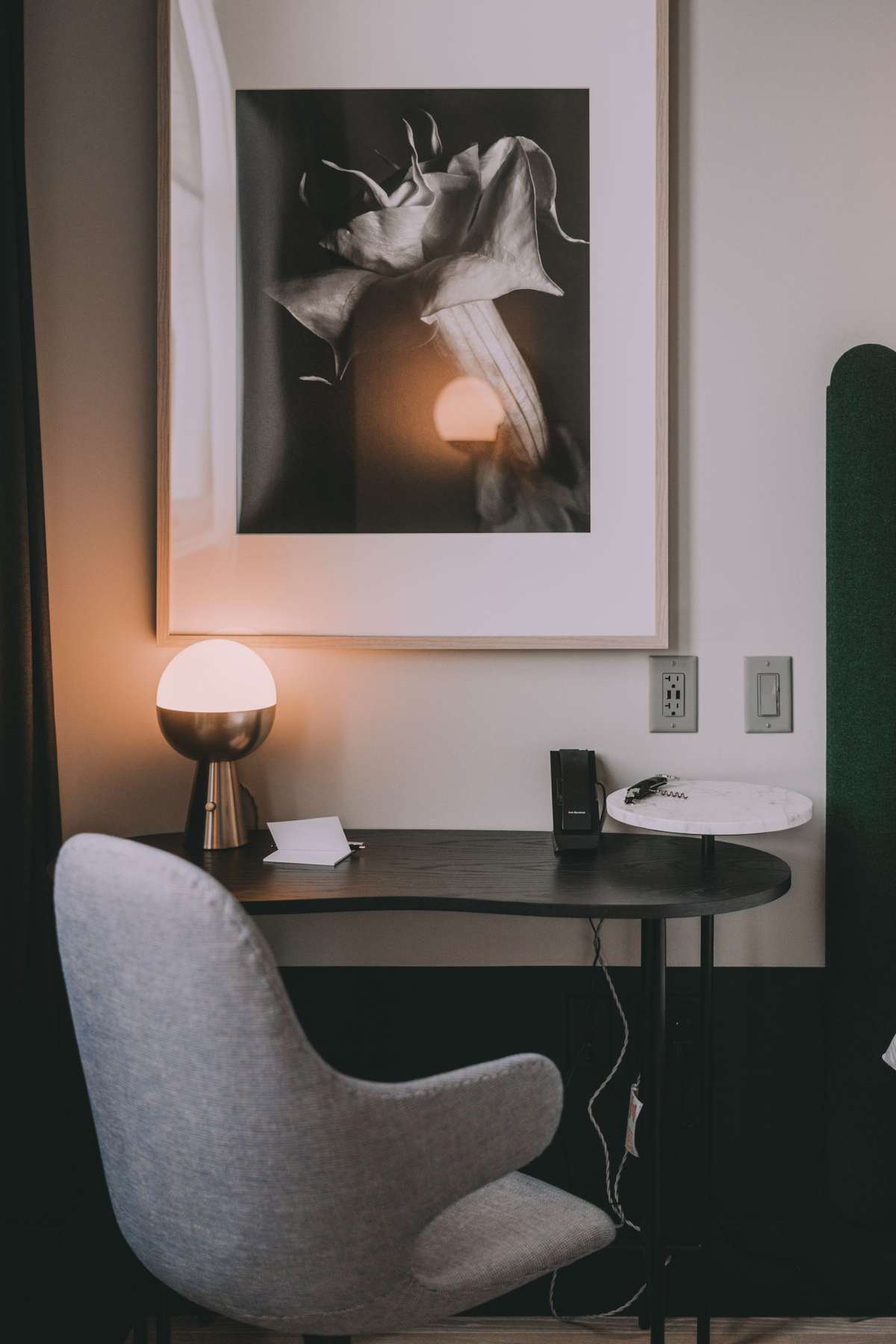
Fine art paper prints are images on heavyweight, matte, archival papers — often cotton rag — of the kind galleries and photographers have used for a century. Paper holds the finest detail of any format here, with deep, soft blacks and a surface that shows nothing but the image. It is the format for drawings, etchings, watercolor, black-and-white photography, and any image whose detail is the point. The trade-offs are structural: paper needs a frame and usually a mat to be displayed, it sits behind glass or acrylic glazing that can reflect, and it wants a dry room and indirect light. In return, a matted paper print has a quiet formality nothing else on this list quite matches — the white border of the mat does the same work a gallery wall does, isolating the image and inviting a closer look.
Do the mat math when you plan a wall: a mat typically adds 2 to 4 inches of border on every side, so a 16 by 20 inch print in a 3-inch mat and a modest frame occupies roughly 23 by 27 inches of wall. That is a feature, not overhead — it is how a modestly priced print gains the presence of a much larger piece — but it surprises people who measured only the image. When you hang paper behind glass in a bright room, ask about anti-reflective glazing; the difference in legibility is not subtle.
Acrylic: glassy depth
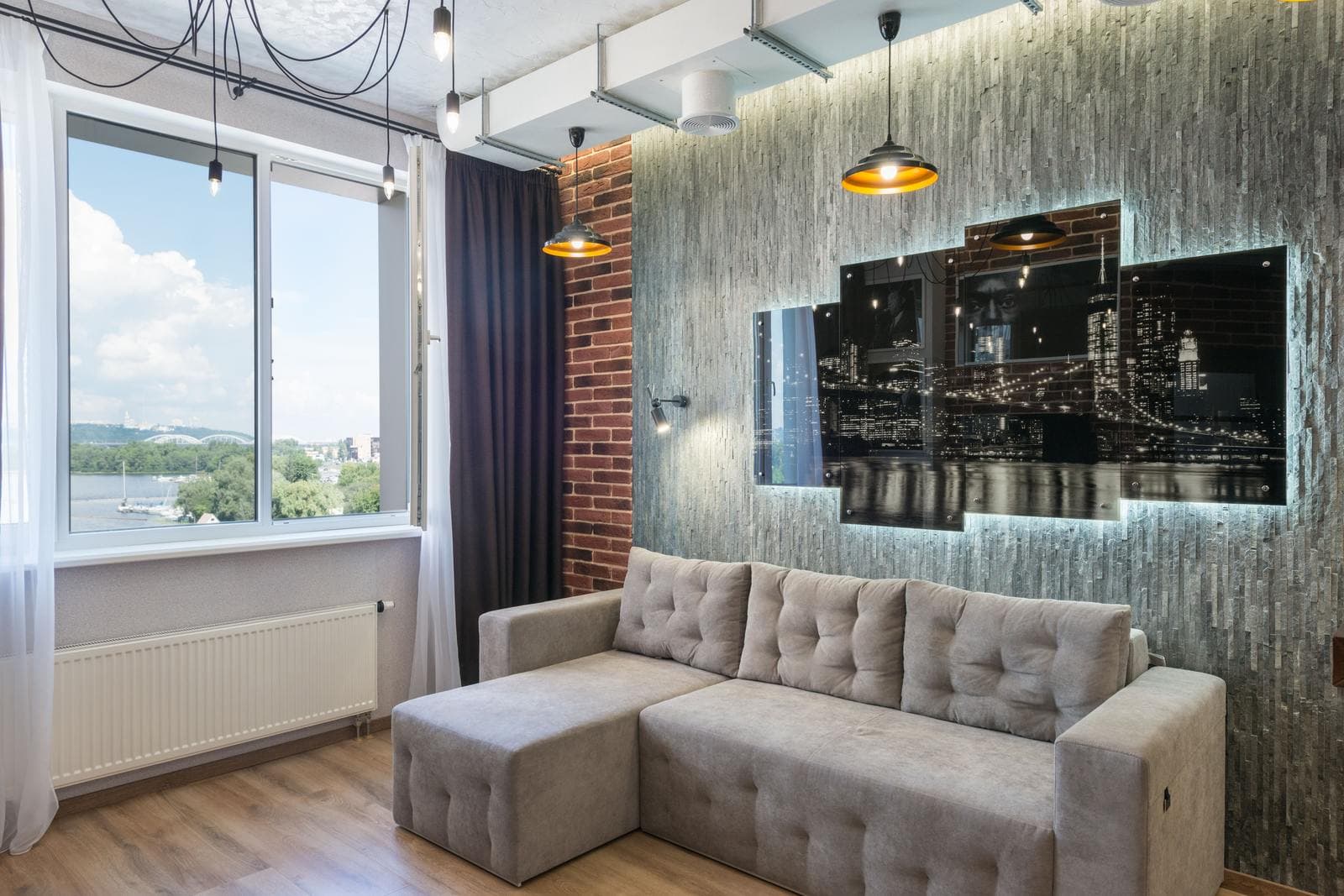
An acrylic print is an image printed on paper or directly on sheet, then face-mounted behind a polished panel of clear acrylic, so you look at the image through a few millimeters of glass-like depth. Colors gain saturation and shadows gain depth; photographs, cityscapes, and bold color work can look almost backlit. The surface is hard, wipeable, and sealed, which makes acrylic a genuine candidate for kitchens and bathrooms where moisture rules paper out. It is also the most reflective format here — on a wall facing windows it can act like a mirror at the wrong hour — and among the heaviest and most demanding to hang. Choose it where the light is controlled and the image deserves a jewel finish: modern living rooms, offices, and bright spaces where the viewing angle is mostly straight-on.
Metal: modern sheen, built for photographs
A metal print infuses dyes into a coated aluminum panel. The result is a slim, frameless sheet with a luminous finish — whites in the image are the bare metal showing through, which gives skies, water, and highlights a quality no paper quite reproduces. Photographs and bold, graphic images thrive on it; soft, painterly images less so, because the surface is unapologetically modern. Metal is light for its size, rigid, waterproof, and about as low-maintenance as art gets — a damp cloth restores it — which is why it is the practical favorite for bathrooms, kitchens, laundry rooms, and covered outdoor spaces. Finishes run from high gloss to matte; gloss maximizes the luminosity, matte tames reflections in brighter rooms. If your taste runs modern and your subject is a photograph, start your search here — the full guide to metal prints covers the dye-sublimation process, the finish choice, and the care in detail.
Wood: the grain joins the picture
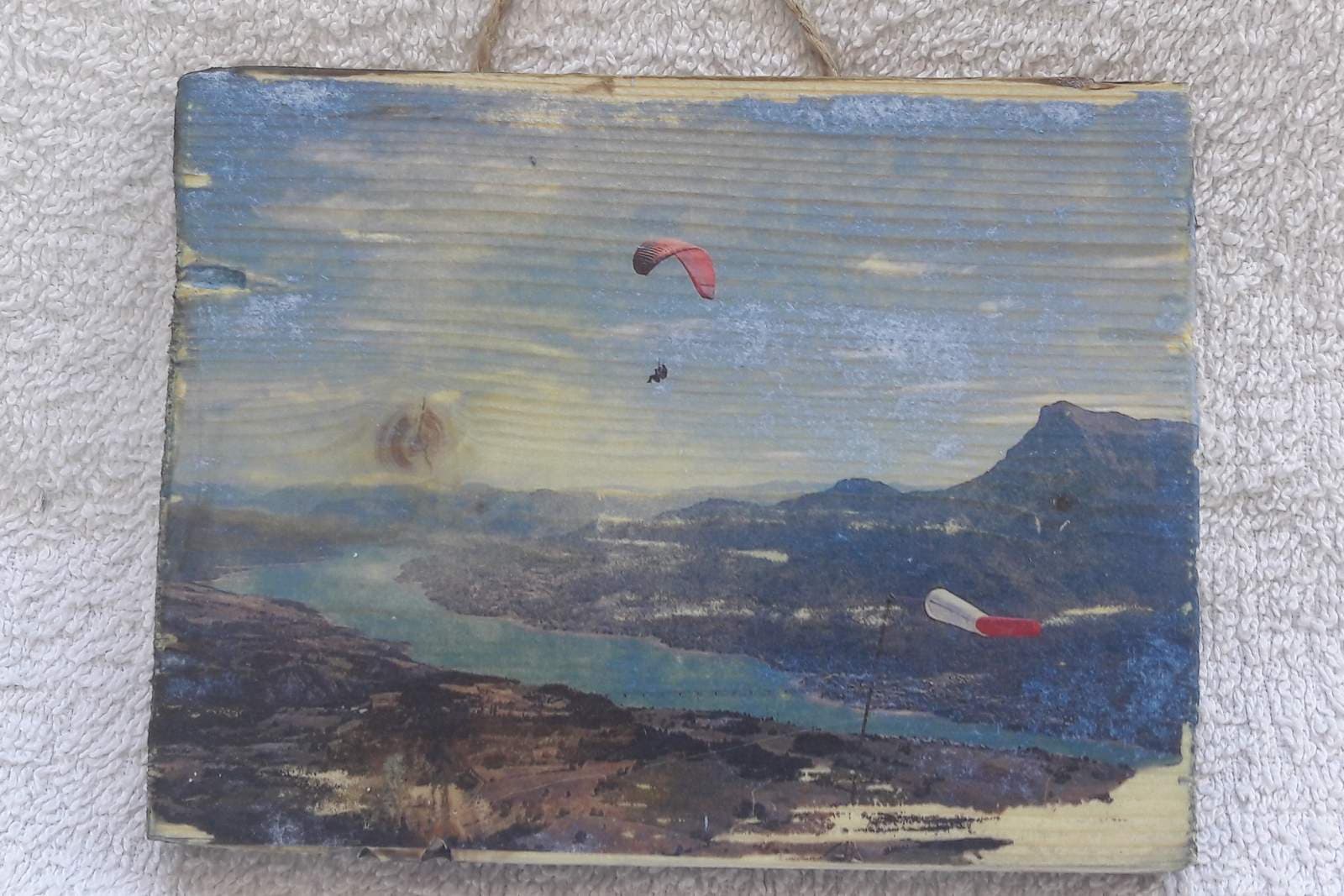
A wood print is an image printed directly onto a plank or panel of wood — often birch or maple — so the natural grain shows through the lighter parts of the image. No two pieces are identical, because no two pieces of wood are. The effect is warm, tactile, and rustic in the best sense, and it suits landscapes, wildlife, lettering, and anything that belongs in a room with timber, linen, and stone. Wood is heavier than canvas at the same size and the image is at the mercy of the grain: a knot will show up in a sky whether you planned it or not, which is part of the charm and part of the risk. It wants a dry, indoor wall and gentle care — dust it, keep it out of steam. In farmhouse, cabin, and coastal rooms, it can be the single most characterful choice on this list.
Wall peels: art with an exit strategy
Wall peels are images printed on removable vinyl that adheres directly to a smooth wall and peels away cleanly when you are done — no frame, no holes, no hardware at all. They are the renter’s format, the dorm room and kids’ room format, and the right answer for anyone whose taste changes faster than their lease. Modern peels have a matte, fabric-like finish that looks far better than the glossy stickers the name may suggest. The limits are real: they need a smooth, clean, fully cured painted surface (fresh paint needs a few weeks), they will not grip textured or damaged walls, and at very large sizes a photographic peel will not match the presence of a wrapped canvas. Judge them as what they are — flexible, forgiving, and fun — and they are hard to beat in the rooms they are made for.
Care and longevity, honestly compared
Every format on this list, decently made, is a decades purchase under ordinary indoor conditions; the differences are in what each one fears. Paper fears water and sunlight most — keep it dry, hang it out of direct sun, and it will outlast the furniture. Canvas fears steam, abrasion at the corners, and slack: over the years a wrap can relax slightly, and good construction (corner keys, quality canvas) is what prevents it. Acrylic fears scratches and the wrong cleaner — microfiber and water, never ammonia-based sprays, which craze the surface. Metal fears dents at the edge and not much else; it is the cockroach of the group, in the kindest sense. Wood fears humidity swings, which move the panel. Peels fear dirty walls and impatience during application.
Cleaning effort runs inverse to glamour. Canvas, metal, and wood want a dry or barely damp dusting. Paper behind glass wants the glass cleaned and nothing else touched. Acrylic wants the most care and shows fingerprints the most readily — the price of that jewel finish. None of this should dominate the decision, but if you are choosing between two finalists, the one whose care matches your actual habits — not your aspirational ones — is the right one.
Types of wall art prints: the four questions
Work through these in order and the format usually picks itself. What is the light like? Bright, window-facing walls favor matte surfaces — canvas, paper, wood — while acrylic and gloss metal need angles that keep reflections off the viewing side. What is the air like? Steam and splashes rule out paper and bare wood; metal, acrylic, and sealed peels handle humidity, canvas tolerates ordinary rooms but not bathrooms that steam daily. What can the wall hold? Canvas and metal are light for their size; large acrylic and wood pieces need studs or proper anchors, and peels need nothing but a smooth surface. How do you live? If you move often, rearrange often, or clean everything with the same cloth, the forgiving formats — canvas, metal, peels — will make you happier than the precious ones.
Types of wall art prints: one image, several answers
Notice what this tour of the types of wall art prints has not done: crowned a winner. A misty landscape is right on canvas in the bedroom, right on metal in the bathroom, and right on paper, matted, in the study — because the room is part of the artwork’s job. When you are ready to compare actual pieces, browse the catalog by format and ask of each candidate the only question that matters: not “is this the best material,” but “is this the right material for this wall, this light, and this room.”
More in Formats & Materials
Continue exploring: Formats & Materials guides · All guides