
What Is a Canvas Print? How It Is Made
It looks simple from the sofa, but the weave, the ink, and the hidden wooden bars decide whether it stays taut and quiet or starts to sag.
Key Takeaways
- A canvas print is an image printed by inkjet onto woven fabric, then stretched tight over a wooden frame — a matte, textured panel that arrives ready to hang with no glass, mat, or separate frame.
- The weave softens the finest detail but forgives slightly soft or painterly images, and because canvas is matte it throws no reflections and reads the same from an angle as it does straight on.
- Ink and coating matter more than the giclee label: pigment inks are the stable, light-resistant choice, while dye inks fade faster, and a clear protective coating guards against scuffs, fingerprints, and ultraviolet light.
- Good construction is hidden: kiln-dried stretcher bars with beveled inner edges, corner keys that can re-tension the fabric later, and a crossbar on large pieces.
- Judge one in person on tension, neat flat corners, a tidy fitted back, and a straight wrap — then care for it as a textile, dusting dry or barely damp and keeping it out of steam and sharp knocks.
A canvas print is a digital image printed with inkjet technology onto woven fabric, then stretched tight over a wooden frame so the fabric becomes a flat, hangable panel. That is the whole definition — the complete answer to what is a canvas print — but each of those three parts, the fabric, the print, and the stretch, changes what you see on the wall. The canvas format is the most popular way to buy wall art precisely because those parts combine well: a matte surface, a real textile texture, and a finished object that arrives ready to hang with no glass, no mat, and no separate frame required.
It is worth taking the object apart, at least on paper, because “canvas print” covers a range of construction quality, and the differences are visible from across the room. A well-made one is taut, square, and quiet to look at. A poor one ripples at the corners and sags a little more each humid summer. Everything below is how to tell which is which — and what the weave does to a picture in the meantime; the step-by-step of how a canvas print is made, from file to stretcher frame, is its own guide in this series.
What is a canvas print? A weave, not a sheet
Print canvas is a plain-weave fabric, most often cotton or a cotton-polyester blend. Cotton has the longer history and a slightly softer hand; polyester holds tension well and resists the slackening that humidity can coax out of natural fiber; blends split the difference. Whatever the fiber, the fabric is coated before printing with an inkjet-receptive layer — think of it as a primer — that keeps ink sitting at the surface in crisp dots instead of wicking along the threads and going fuzzy.
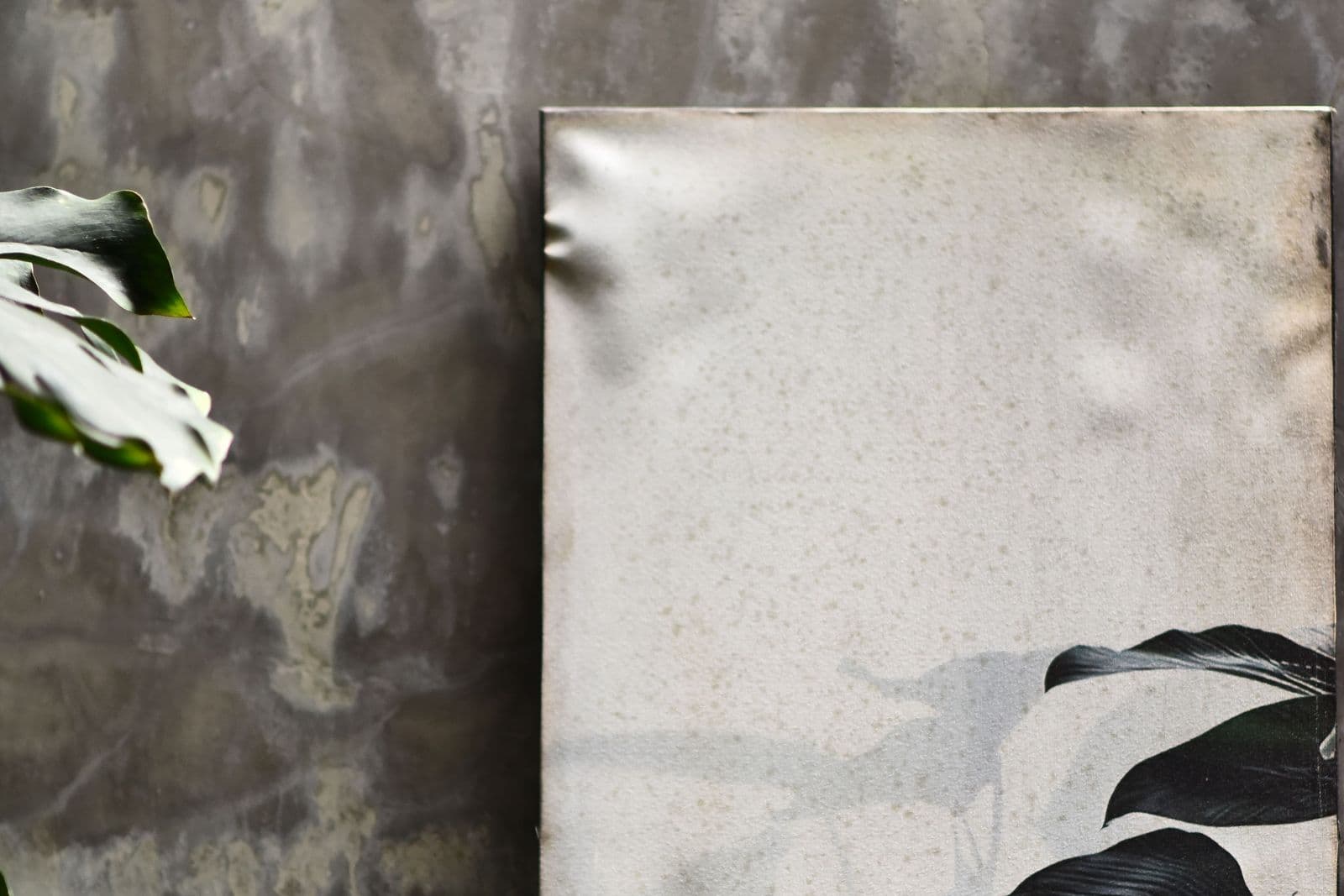
The weave is the point. Unlike paper or metal, canvas has a physical grid of raised threads, and light catches that grid at a fine scale. From normal viewing distance the texture reads as depth and a faint painterly quality; it is also why a canvas print is not the same object as a print on canvas-textured paper, a cheaper material that photographs flat and feels like what it is — paper wearing a costume. Real weave has depth you can see at a raking angle and feel with a fingertip.
The print itself: ink, laid down in droplets
The image arrives by inkjet: thousands of nozzles lay down microscopic droplets in layers until the picture builds to full density. You will see this marketed as “giclée,” a French word for sprayed ink that the art-print world adopted as a quality badge. Treat the word as neutral — it describes the same inkjet process at every level; what actually varies is the printer’s resolution, the number of ink colors it mixes from, and the care taken with color matching, none of which the badge guarantees.
The ink matters more than the label. Pigment inks — where the color sits in tiny solid particles suspended in the droplet — rest on the coated surface and are the stable, light-resistant choice for work meant to hang for decades. Dye inks soak in and can be vivid, but they fade faster in bright rooms. Over the print, many makers add a clear protective coating in a matte, satin, or gloss finish; it is the canvas equivalent of varnish, guarding against scuffs, fingerprints, and ultraviolet light, and it is the layer that decides whether the finished surface has any sheen at all. When you compare two canvas prints at different prices, you are often paying for differences in exactly these two layers — the ink and what protects it.
The frame you never see: stretcher bars
Under the fabric sits a rectangle of wooden bars, usually kiln-dried pine or a similar stable softwood — kiln-dried because green wood warps, and a warped bar twists the whole panel. The bars come in two common depths: a standard depth of roughly three-quarters of an inch, and a gallery depth of roughly an inch and a half. Depth is not just looks; a deeper bar is stiffer, resists bowing on wide pieces, and holds the finished print further off the wall, which is part of the format’s presence.
Two construction details separate good stretching from careless work. First, the inner edge of each bar is beveled or rounded, so the fabric touches only the outer face; a sharp inner edge pressed against the canvas eventually shows through as a ghost line. Second, the corners are built with small wooden keys or wedges that can be tapped to re-tension the fabric years later if it relaxes. Large pieces add a crossbar for the same reason a long shelf gets a middle bracket. None of this is visible from the front — all of it is visible in how the front behaves over time.
Gallery wrapping: the image goes around the corner
Gallery wrapping is the technique that defines the modern canvas print: instead of stopping at the front face, the fabric continues around the sides of the stretcher frame and is fixed at the back. The result is a complete object with image on its edges, which is why it needs no frame. Gallery wrapping pairs naturally with the deeper bar depth — the wrap needs somewhere to go.
There are three ways the edge itself gets handled, and the choice matters to how a specific image looks. A full-bleed wrap simply continues the image around, which costs the image its outer margin — anything important near the edge bends around the side, so it suits scenes with breathing room. A mirror wrap reflects the edge pixels outward to create that margin artificially, keeping the whole image on the front while the sides echo it. A solid-color edge wraps the sides in a single chosen tone, the crispest and most graphic option. None is the “right” one; they are three different answers to where the picture ends.
What the texture does to a picture
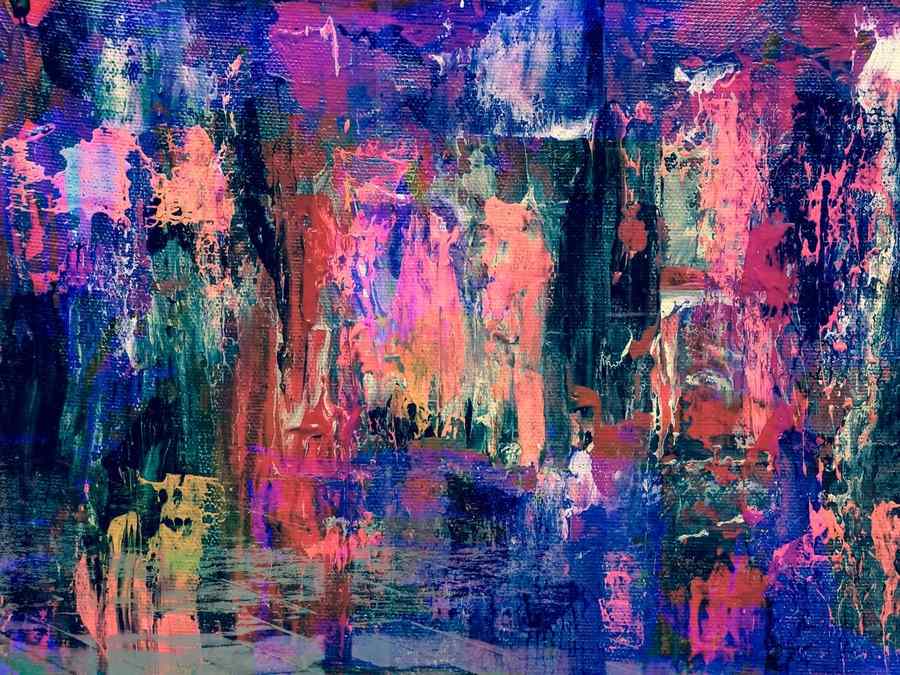
The weave is a filter every image passes through. It softens the finest detail — tiny text, distant foliage, hairline architectural lines lose a step of crispness — and in exchange it forgives: slightly soft photographs, painterly images, and big atmospheric scenes all gain a coherence on canvas that a harder surface would not give them. This is why landscapes are the format’s home ground: horizons, mist, and water have no fine print to lose, and the texture adds the sense of a made object rather than a window.
The second effect is about light. Canvas is matte, so it does not throw reflections; a canvas print reads the same from a sofa at an angle as it does standing in front of it, and it stays readable on bright walls and opposite windows where a glossy surface would mirror the room back at you. The trade is that matte surfaces never produce the saturated punch of a glossy one — colors are true but calm. Knowing that trade in advance is most of choosing this format well.
Light for its size, honest about its limits
Fabric and softwood weigh very little, so a canvas print is the lightest way to cover a large wall — a genuine practical virtue above beds and sofas, and the reason the format scales to sizes that would make glass-fronted pieces heavy and awkward. Hanging hardware works that much less hard, and one person can hang a big piece alone.
The honest limits: canvas is a textile, and it can be dented by a sharp knock or punctured by a corner of furniture in a way a metal panel cannot. The lack of glass means no glare — and no shield; the surface is exposed to dust and splashes. Tension depends on the stretching: a loosely stretched print can ripple, and sustained steamy conditions are unkind to any fabric-and-wood object. None of these are reasons to avoid the format; they are reasons to hang it like the textile it is.
What is a canvas print: how to judge one
Run through four checks. Tension: the surface should be drum-tight and flat, with no ripples at the corners and no soft give when you press the center gently. Corners: the folds should be neat and flat, not bunched — corner bulk is where hurried stretching shows. The back: fixings should be smooth and covered or trimmed, and hanging hardware should be fitted, centered, and rated for the piece. The edges: the wrap should run straight, with the image level on the sides rather than creeping. Care afterwards is simple — dust with a dry or barely damp cloth, never soak it, and keep it out of weeks of direct midday sun, as you would any colored textile; the fuller buyer’s checklist is our field guide to what makes a quality canvas print, which walks a piece from its fabric to its back panel.
If you are weighing canvas against the harder surfaces, start from the image and the room’s light rather than the material in the abstract — the full rundown of wall art formats weighs all seven surfaces the same way — and when you are ready to look at pieces with these construction points in mind, browse the collection by subject and size. What is a canvas print, in the end? A simple, honest object you can judge at a glance — one that stops being a mysterious commodity once you have taken it apart this way.
More in Formats & Materials
Continue exploring: Formats & Materials guides · All guides